
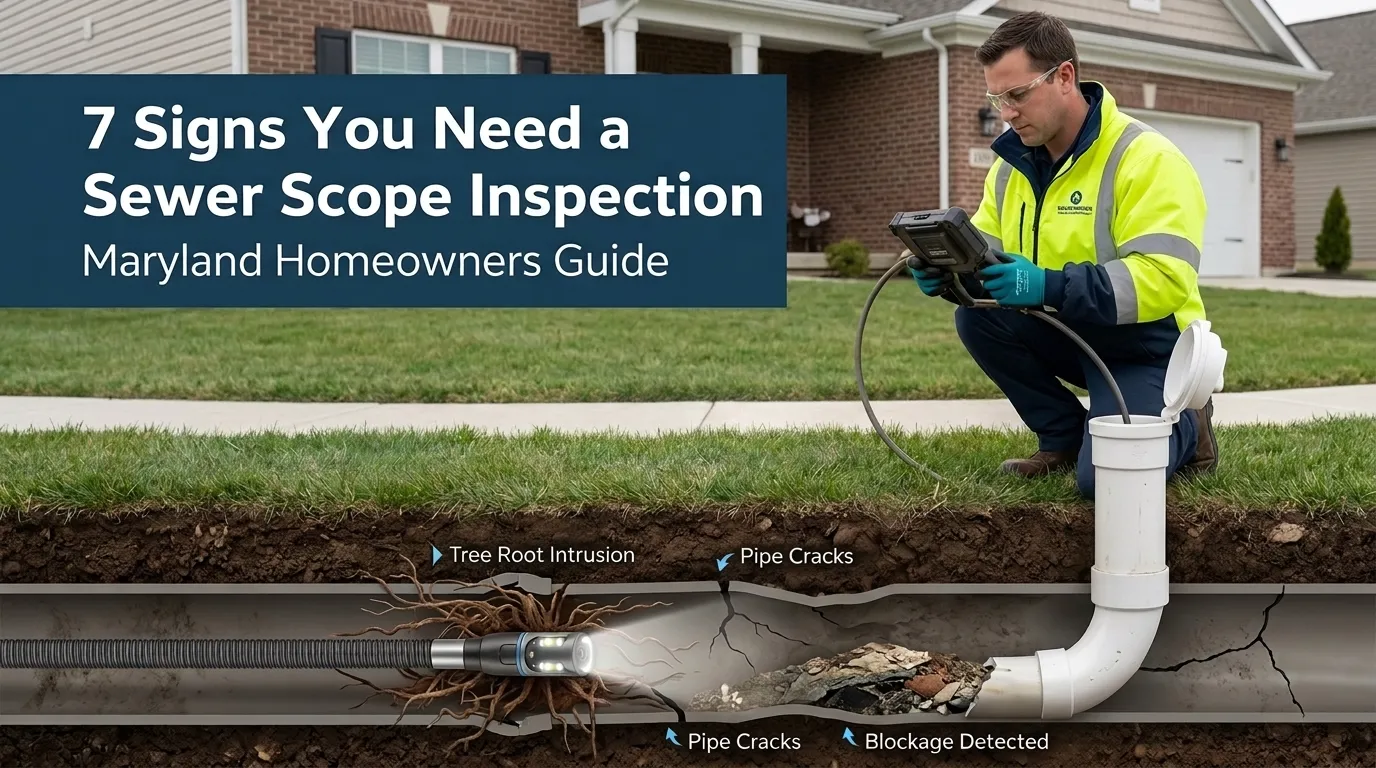
A sewer scope inspection is a process where an advanced camera is used to assess the condition of the sewer line underground, highlighting any cracks, clogs, and tree roots that could pose serious problems at a later stage. Most sewer line issues remain concealed underground until they result in a problem like a sewage backup, sewage odor, or flooding basement.
Homeowners in Maryland who have aged infrastructures, old clay or cast iron pipes, and changes in the moisture level of soil due to different seasons can benefit a lot from identifying these signs early and saving themselves from hefty plumbing bills. In this guide, you will find out about the seven major warning signs, and what does a sewer scope inspection entails.
What Is a Sewer Scope Inspection?
A sewer scope test is a diagnostic procedure in which the sewer inspector uses a flexible waterproof camera that is inserted into the pipe to view its inside condition via a live video feed.
The elements that the inspector looks for during a sewer camera test include:
- Tree roots damaging the pipes
- Pipe cracks or breakage
- Corrosion in the metal pipes
- Grease clogs
- Bellies of the pipe (sagging)
- Collapses or partial collapses of the lines
The benefit of this method is that no invasive procedures are needed in order to detect the condition of the sewer pipes. Since the pipes are quite old in most cases within Maryland, regular sewer line tests have become quite common among homeowners.
Why Ignoring Sewer Line Problems Can Be Expensive
A small crack or small root intrusion does not remain small for long. It keeps expanding until it gets to a stage where you need to replace the entire pipe. Neglecting initial sewer line problems is sure to result in:
- Damage to property and water because of leakages
- Development of mold on walls, floors, and crawl spaces
- Settling of foundations due to soil erosion
- High emergency plumbing bills that are much higher than regular bills
- Health complications resulting from contamination of water with sewage
Performing sewer scope testing early will ensure that what could be an expensive problem will become a relatively inexpensive one.
1. Slow-Draining Sinks, Tubs, and Toilets
While a slow drain in one area may be a simple clog. However, the situation where the sink, bathtub, toilet, etc., in your home all drain slowly together at once would be because of a larger issue with the sewer line itself.
This problem is often overlooked and passed off as simply an inconvenience or “old pipes,” however slow drainage is one of the most common indicators of sewer line inspection needed.
2. Frequent Drain Clogs Throughout the House
Clogs can happen from time to time. However, frequent clogs on different faucets are something else. There is a great distinction between clogs of one faucet that can easily be removed with the help of a plunger or drain snake and clogs of your sewer line that keep repeating regardless of how often you clean them.
Frequent drain cleaning solves only the problem but not its root causes. If you have to call your plumber to solve the problem of the same clog each several months, then this means that there is some serious issue with your sewer line that requires checking with a camera.
3. Sewage Odors Inside or Outside Your Home
The constant odor coming from sewage is mostly caused by either a damaged or a cracked sewer pipe in your home or garden. In cases when the odor comes from inside your house, it mostly comes from close vicinity of floor drains, basements, and bathrooms, but in cases when the odor appears outdoors, it mostly accumulates in the part of the yard where sewer pipes run.
Not only is it an unpleasant smell, but it is also dangerous for your health because of the escaping gas and bacteria.
4. Water Backing Up Into Drains
The backup of water into the basement drains, floor drains, or toilet is another critical indicator that a sewer scope inspection should be done in Maryland. This will usually indicate a problem within the sewer lines further down that causes the water to go backwards.
This is not an issue where time can be wasted. Backup may become an overflow of sewage, and there is no better way than through the use of a camera inspection to locate where the problem exists.
5. Wet or Soggy Areas in Your Yard
If you see patches of soft or soggy soil on your property during dry weather conditions, it probably means that you have a water leak in your lawn. When sewer pipes are leaking, the moisture seeps into the soil around them, leaving wet spots of earth wherever you look.
There is also a difference between an irrigation water leak and a sewer pipe leak. An irrigation water leak occurs close to the sprinkler heads, whereas a sewer water leak occurs along the sewer pipes’ route.
6. Bright Green or Fast-Growing Grass Patches
Waste water contains nutrients like nitrogen and organic matter, which help fertilize the grass. An area of the grass that appears to grow greener or faster compared to other areas of your lawn, especially around the route of your sewer line, may be a sign of a slow and constant leak from your pipe into the ground.
This is one of those less known signs of trouble in your yard, since a healthy patch of grass is actually good news!
7. Cracks in the Foundation or Driveway
Any leaks in the sewer lines will cause shifting soil underneath your house. This soil movement will affect all the structures constructed on top of it. Foundation settling, driveway cracking, and other forms of structural damages may be caused by the leaking sewer lines after some period of time.
Though there may be several causes of foundation problems, leaking sewer line can be one of those which often go unnoticed. In case of occurrence of cracks alongside the other listed symptoms, you should consider sewer scope inspection to eliminate this cause.
Schedule Your Sewer Scope Inspection in Maryland Today
Hidden sewer line issues can quickly turn into expensive repairs. Our experienced Maryland inspectors use advanced sewer camera technology to identify cracks, blockages, tree root intrusion, and other problems before they become major plumbing emergencies. Book your professional sewer scope inspection today and protect your home with confidence.
Schedule Your Inspection →Other Warning Signs Maryland Homeowners Should Watch For
In addition to the seven primary indications listed above, be aware of:
- Gurgling noises in your toilet or drain lines
- Bubbles forming when you use another plumbing fixture
- Rodent activity in or around your property’s yard or foundation
- Higher water bills for no apparent reason
- Several plumbing problems occurring simultaneously
Each alone may not indicate a problem. Several together definitely do.
What Problems Can a Sewer Scope Inspection Detect?
| Issue Detected | What It Means for Your Home |
| Tree root intrusion | Roots grow into pipe joints, causing blockages and cracks |
| Pipe corrosion | Weakens pipe walls, especially in older metal pipes |
| Cracked sewer pipes | Allows leaks and soil infiltration |
| Offset joints | Creates gaps where debris and roots can enter |
| Bellied pipes | Low spots that trap waste and cause recurring clogs |
| Collapsed lines | Blocks flow entirely, often requiring excavation |
| Grease buildup | Narrows the pipe interior, slowing drainage over time |
| Debris blockage | Causes backups and slow drains throughout the home |
| Pipe separation | Creates leaks and structural weak points underground |
When Should You Schedule a Sewer Scope Inspection?
The timing is just as important as identifying the warning signs themselves. It might be a good idea to get your sewer inspected:
- Prior to purchasing a property to avoid dealing with unforeseen problems
- Prior to selling a property to fix any potential problems prior to sale negotiations
- If you own an older home in Maryland that has its original piping system
- If you’ve had repeated plumbing issues
- After a storm to account for soil shifting on pipes
Why Maryland Homes Are More Susceptible to Sewer Line Problems
Several regional factors make sewer line issues more common across Maryland:
| Factor | Why It Increases Risk |
| Aging infrastructure | Many sewer systems were installed decades ago |
| Older pipe materials | Clay and cast iron pipes crack and corrode over time |
| Mature trees | Established root systems seek out pipe joints for moisture |
| Seasonal temperature changes | Freeze-thaw cycles stress pipes and joints |
| Heavy rainfall | Saturates soil and increases pressure on buried lines |
| Soil movement | Shifting ground can crack or separate pipe sections |
Benefits of Early Sewer Scope Inspections
Here are a few benefits of getting a sewer scope done before things get worse:
- Identifies problems before the entire pipeline becomes defective
- Helps you save money on repairs since the problems will be detected at an early stage
- Avoids any last-minute calls to plumbers for emergency services
- Helps maintain your property’s value, especially if there is an upcoming property sale
- Increases the lifetime of the sewer pipeline
- Relieves you of stress by informing you about the status of your sewer system
What Happens During a Professional Sewer Scope Inspection?
The normal procedure is quite simple. The technician comes and conducts an initial evaluation of your plumbing access points, after which the sewer camera is introduced into a cleanout or drainage access point. After that, the camera travels through the pipe as the technician watches the video feed from the attached monitor.
Notes are made and you will get an inspection report detailing the status of the pipes and repair advice if needed. A sewer scope inspection normally takes 30 to 60 minutes, depending on the size of the sewer pipe.
Conclusion
Slow drains, clogging issues, sewer smells, water backing up into your house, wet spots in the lawn, a greener patch of grass than usual, and cracks in the foundation are all indicators that you need to have a sewer scope inspection done in Maryland. Dealing with these indicators early will save you money and keep your house from getting damaged by a bigger issue.
Getting a professional sewer scope inspection done will give you a clear picture of what is going on below ground.
Frequently Asked Questions
How often do I need a sewer scope inspection?
It is recommended to inspect your sewage once in a year or two, or earlier if any signs appear. If you have mature trees around or old pipes, you might need an inspection more often.
How much time does a sewer scope inspection require?
Normally it takes 30-60 minutes, but more complicated sewer lines can be inspected longer.
Can a camera see roots growing in a sewer pipe?
Yes. One of the main problems that the camera can show is the root invasion into pipe connections and cracks.
Is a sewer scope inspection worth money?
Yes, it definitely is, because its cost is significantly lower than costs of an emergency repair or a new installation due to the problem not detected beforehand.
Do I need to inspect my sewer line if I live in Maryland and own an older home?
Yes, you should. Old homes normally have clay or cast iron pipes and can be easily damaged by cracks or corrosion.


