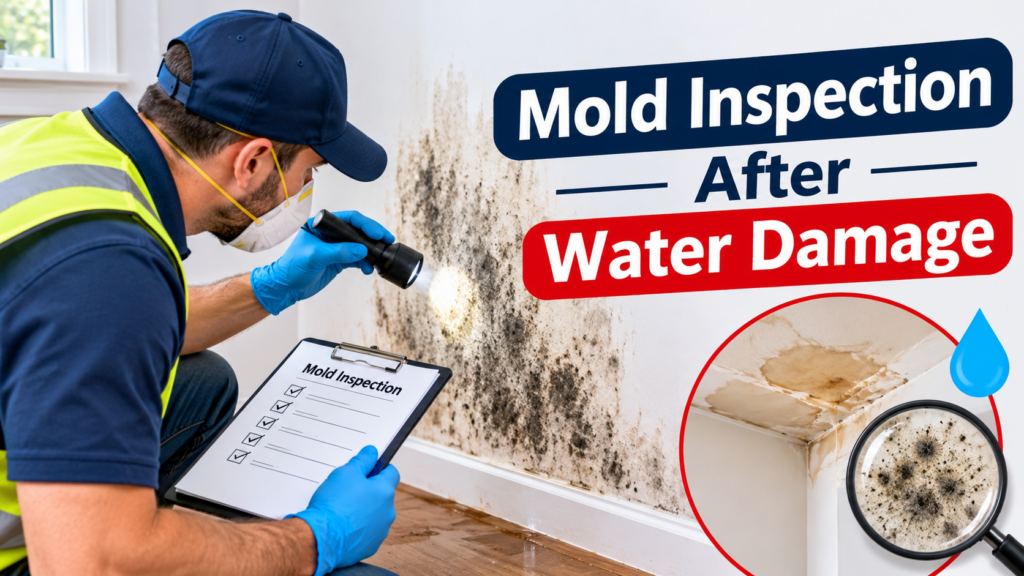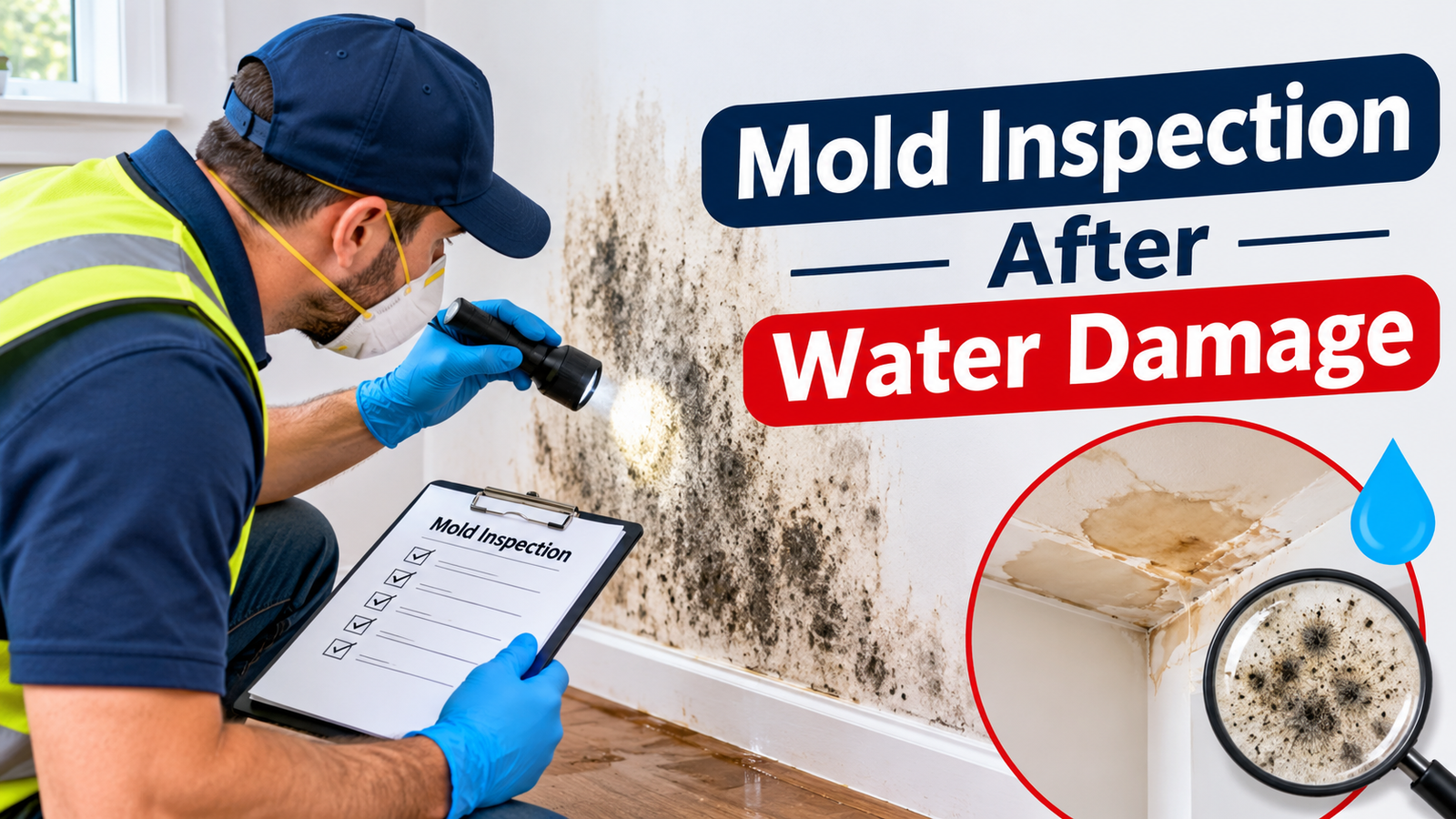
You’ve mopped up the water, run the fans, and the carpet finally feels dry. The crisis seems to be over. But water damage rarely ends when the puddle does.
Moisture soaks into drywall, insulation, subfloors, and framing, places you can’t see and can’t easily reach. Left alone, it creates the exact conditions mold needs to grow. That’s why a mold inspection after water damage is one of the smartest steps you can take, whether the cause was a burst pipe, a roof leak, a basement flood, or a failed appliance.
This guide explains why mold follows water, how quickly it appears, what a professional inspection involves, and what to do next.
Why Water Damage and Mold Go Hand in Hand
Mold spores are everywhere, indoors and out. They’re harmless in small numbers while they stay dormant. What they need to wake up and multiply is moisture, a food source, and time.
Your house provides plenty of food: drywall paper, wood framing, carpet padding, insulation, ceiling tiles, even dust. Water damage supplies the missing ingredient. Once building materials stay damp, mold can colonize them.
The timeline is short. The U.S. Environmental Protection Agency advises that wet materials should be dried within 24 to 48 hours to prevent mold growth. After that window, the risk climbs quickly, especially in warm, humid, or poorly ventilated spaces.
Maryland homeowners have extra reason to be careful. Humid summers, heavy storms, older housing stock, and basements prone to seepage all make moisture problems common across the state.
How Soon Should You Schedule an Inspection?
There’s no single answer, but here’s a practical rule of thumb:
- Within 1–3 days of the water event: If the damage was significant (a flood, a sewage backup, or water that sat for more than a day), an early inspection can find trapped moisture before mold takes hold.
- After professional drying is complete: Many people schedule an inspection to confirm the structure is actually dry and no mold was missed.
- Any time you notice warning signs: If you see or smell something days, weeks, or even months after the incident, don’t wait.
Mold can also appear long after an event you thought was resolved. A slow leak behind a wall can quietly feed growth for months before anything shows on the surface.
Warning Signs That Mold May Be Growing
Visible mold is the obvious clue, but many cases start subtler. Watch for:
- A musty, earthy odor, especially in basements, closets, or rooms that were wet
- Discoloration on walls, ceilings, or floors, including yellow, brown, green, gray, or black patches
- Peeling, bubbling, or cracking paint and wallpaper
- Warped baseboards, buckled flooring, or soft drywall
- Condensation on windows and pipes, which suggests excess indoor humidity
- New or worsening symptoms indoors, such as sneezing, coughing, itchy eyes, throat irritation, or headaches that improve when you leave the house
That last point deserves care. Mold doesn’t affect everyone equally. People with asthma, allergies, weakened immune systems, young children, and older adults tend to react most. An inspection won’t diagnose a health condition, but it can tell you whether your home is contributing to the problem.
What Happens During a Professional Mold Inspection
Many homeowners aren’t sure what to expect, so here’s a typical walk-through. A thorough mold inspection is part detective work and part building science.
1. A conversation about the water event
The inspector will ask what happened, when, how long the area stayed wet, and what drying or cleanup has been done. This history matters. A clean-water pipe leak and a flood carrying outdoor contaminants call for different levels of concern.
2. A visual assessment
The inspector examines the affected areas and surrounding spaces: walls, ceilings, floors, window frames, crawl spaces, attics, basements, HVAC components, and under sinks. They look for visible growth, staining, water marks, and signs of material failure.
3. Moisture readings
Instruments called moisture meters measure how much water remains in building materials. A wall can look and feel dry while still holding enough moisture to support mold. Readings help separate truly dried areas from ones that need more work.
4. Locating the moisture source
Cleanup means little if the source keeps feeding the problem. A good inspector looks for the cause: a leaking supply line, roof flashing failure, poor grading, clogged gutters, a failing window seal, or inadequate ventilation.
5. Sampling, when it’s warranted
Depending on the situation, the inspector may recommend air samples, surface samples, or both. The lab analysis identifies mold types and concentrations. We’ll cover when sampling makes sense in the next section.
6. A written report
You should come away with a clear, documented report: what was found, where, how serious it appears, and what steps to take. That report is valuable for insurance discussions, contractor quotes, and real estate transactions.
Do You Really Need Lab Testing?
This is where honest advice matters. The EPA does not recommend routine mold sampling in every situation. If you can already see mold, sampling often won’t change what needs to happen: the mold has to be removed and the moisture problem fixed.
Sampling becomes useful when:
- You smell mold but can’t find its source
- Someone in the home has persistent symptoms and you want to understand air quality
- You need documentation for an insurance claim, landlord dispute, or legal matter
- You want to verify that cleanup or remediation was successful
- The water damage was widespread and hidden growth is suspected
A trustworthy inspector explains whether testing is genuinely helpful for your situation instead of upselling it automatically. If a company pushes expensive testing without first examining the home, be cautious.
Finding Hidden Moisture With Thermal Imaging
Some of the worst mold problems hide where nobody is looking: inside wall cavities, above ceilings, or beneath flooring. Thermal imaging helps by revealing temperature differences that often point to moisture.
Wet materials hold and release heat differently than dry ones, so an infrared camera can highlight suspicious patches on a wall or ceiling without cutting into anything. It’s not a mold detector, because it can’t identify mold itself, but it’s a powerful way to decide where to probe, measure, or sample. If you’d like that added layer of detection, ask about thermal imaging inspection alongside your mold assessment.
Situations Where a Post-Water-Damage Inspection Is Especially Smart
After a flood or major leak
Water that saturated carpets, drywall, or insulation is the classic scenario. Even if a restoration company dried the space, an independent inspection confirms the job worked.
Before you buy a home with a water history
Disclosure forms and fresh paint don’t always tell the full story. If a property has had water intrusion, pairing a general home inspection with a mold inspection gives you a much clearer picture of what you’d be taking on. For buyers, that knowledge can shape repair negotiations or help you walk away from a bad deal.
Before you sell
Sellers who find and address moisture issues proactively tend to face fewer surprises when the buyer’s inspector arrives. Documentation of a clean result can reassure buyers.
During construction or renovation
Moisture trapped behind walls during building can cause trouble years later. A pre-drywall inspection catches framing, plumbing, and moisture concerns while everything is still open and easy to correct.
When plumbing problems are suspected
Recurring backups or unexplained damp spots may point below ground. A sewer scope inspection can reveal cracked, blocked, or root-infiltrated lines that contribute to moisture troubles.
What to Do Immediately After Water Damage
What you do in the first 48 hours matters enormously. Safety comes first, so make sure the area is safe from electrical hazards, and avoid contact with water that may be contaminated.
Then work through these steps:
- Stop the source. Shut off the water supply or arrange temporary roof or window protection.
- Document everything. Take photos and video before you move or discard anything. Your insurance company will want them.
- Remove standing water as quickly as you safely can.
- Dry aggressively. Use fans, dehumidifiers, and open windows when the weather allows. Aim to keep indoor humidity between 30 and 60 percent.
- Remove materials that can’t be saved. Saturated carpet padding, insulation, and soaked drywall often can’t be dried in time. Porous materials hold moisture and mold stubbornly.
- Don’t just paint over it. Covering stains or damp spots traps moisture and hides the evidence.
- Call your insurer and ask what’s covered and what documentation they require.
- Schedule an inspection to verify that the drying worked and nothing is lurking behind surfaces.
If water came from a contaminated source such as a sewage backup or floodwater, bring in professionals for cleanup instead of tackling it yourself.
Understanding Your Results
Mold inspection results usually fall into a few categories.
No significant moisture or mold found. Good news. Keep humidity in check, and consider a follow-up check if the area stays damp or smells off.
Moisture present, no mold yet. This is a warning stage. Dry the materials fully and fix the cause immediately, because growth is likely if conditions continue.
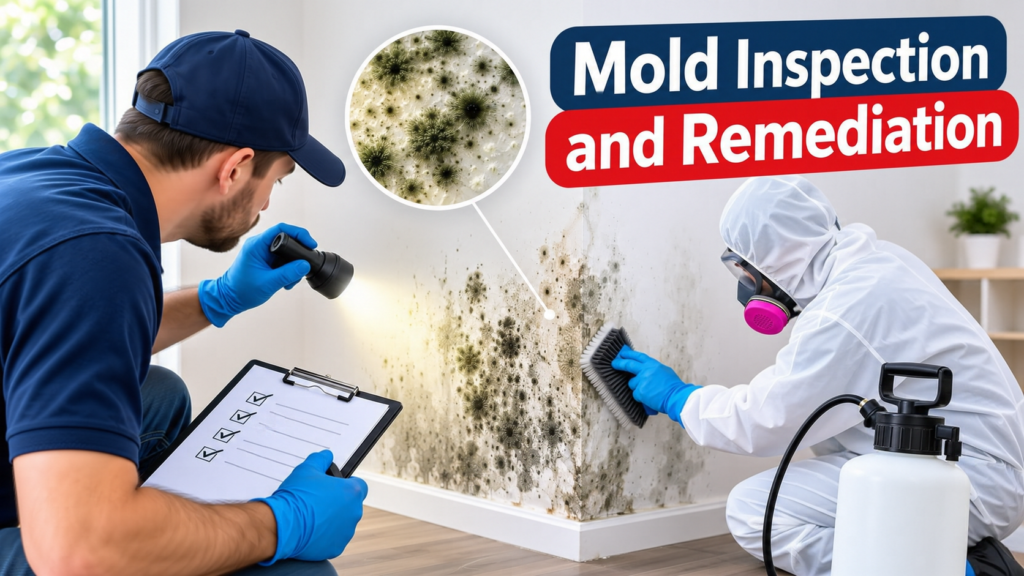
Visible or confirmed mold. The next step is remediation: containing the affected area, removing contaminated materials, cleaning, and correcting the moisture source. Small surface patches may be manageable, but extensive growth, mold in HVAC systems, or contamination after sewage or floodwater generally calls for trained professionals.
One principle worth remembering: inspection and remediation should ideally be separate. An inspector who doesn’t profit from the cleanup has no incentive to exaggerate the problem. Hiring an independent inspector first, then getting remediation quotes, protects you from inflated scopes of work.
After remediation, a follow-up inspection or clearance check confirms the area is actually resolved.
Other Home Concerns That Can Overlap With Water Damage
Water intrusion rarely arrives alone. Damp wood invites more than mold. It can also attract wood-destroying insects, and basements and crawl spaces with moisture problems often have other issues worth examining.
- A termite inspection is smart when wood has been wet for a long period.
- Radon testing is worth considering for basements and lower levels, particularly in areas where radon is common.
Bundling related inspections can save time and give you a more complete understanding of the property’s condition.
How to Choose a Mold Inspector
Not every inspector is equal. Look for:
- Relevant training and credentials, and a team you can actually learn about. You can review the experience of the DeepSeek inspectors here.
- Clear communication, with plain-language explanations instead of scare tactics
- Detailed written reports with photos and recommendations
- Independence, meaning they inspect without selling remediation
- Local knowledge, since regional climate and building styles affect where moisture problems show up
DeepSeek Home Inspections serves homeowners, buyers, and sellers throughout Maryland, including Howard County, Anne Arundel County, Montgomery County, Frederick County, Prince George’s County, and Baltimore County. To learn more about who we are and how we work, visit our About Us page.
What Affects the Cost and Timing?
Prices vary with several factors:
- Home size and the number of areas affected
- Whether lab sampling is included and how many samples are taken
- Accessibility of crawl spaces, attics, and basements
- Whether you add services such as thermal imaging
- Report turnaround requirements
Most inspections take a couple of hours, though larger or more complex situations take longer. Because every home and water event is different, the most accurate route is a custom quote. You can contact the team with details about your situation.
Frequently Asked Questions
Can mold grow even if the area looks and feels dry?
Yes. Moisture can remain inside walls, under flooring, or in insulation long after surfaces seem dry. Moisture meters and thermal imaging help detect it.
How long after water damage does mold appear?
Growth can begin within 24 to 48 hours under the right conditions, though it may take days or weeks to become visible.
Is all mold dangerous?
Reactions vary. Some people are barely affected, while others, especially those with asthma, allergies, or compromised immunity, can have significant symptoms. Regardless of color or type, indoor mold growth shouldn’t be ignored.
Can I just clean mold with bleach?
Bleach isn’t a cure-all, and it doesn’t fix the moisture source. Porous materials such as drywall and carpet often need to be removed. For anything beyond a small, isolated patch, get professional guidance.
Will insurance pay for mold inspection or remediation?
Coverage depends on your policy and on what caused the water damage. Sudden, accidental events are treated differently from long-term seepage or neglected maintenance. Ask your insurer early and keep thorough documentation.
Should I get an inspection if I’m buying a home that had a leak?
Absolutely. Past water intrusion is one of the more important things to investigate before closing. For answers to other common questions, see our FAQ page.
Final Thoughts
Water damage is stressful enough without wondering what’s happening inside your walls. A mold inspection after water damage replaces guesswork with facts. It tells you whether your home is truly dry, whether hidden growth has started, and what steps will protect both your property and your family’s health.
Acting quickly is the biggest advantage you have. Dry fast, document everything, fix the source, and verify the results instead of assuming everything is fine.
If your home has recently been through a leak, flood, or plumbing failure, don’t wait for a musty smell to become a bigger problem. Schedule an inspection with DeepSeek Home Inspections or call (667) 254-8886 to talk with our team. You can also browse all of our inspection services to see how we can help.