
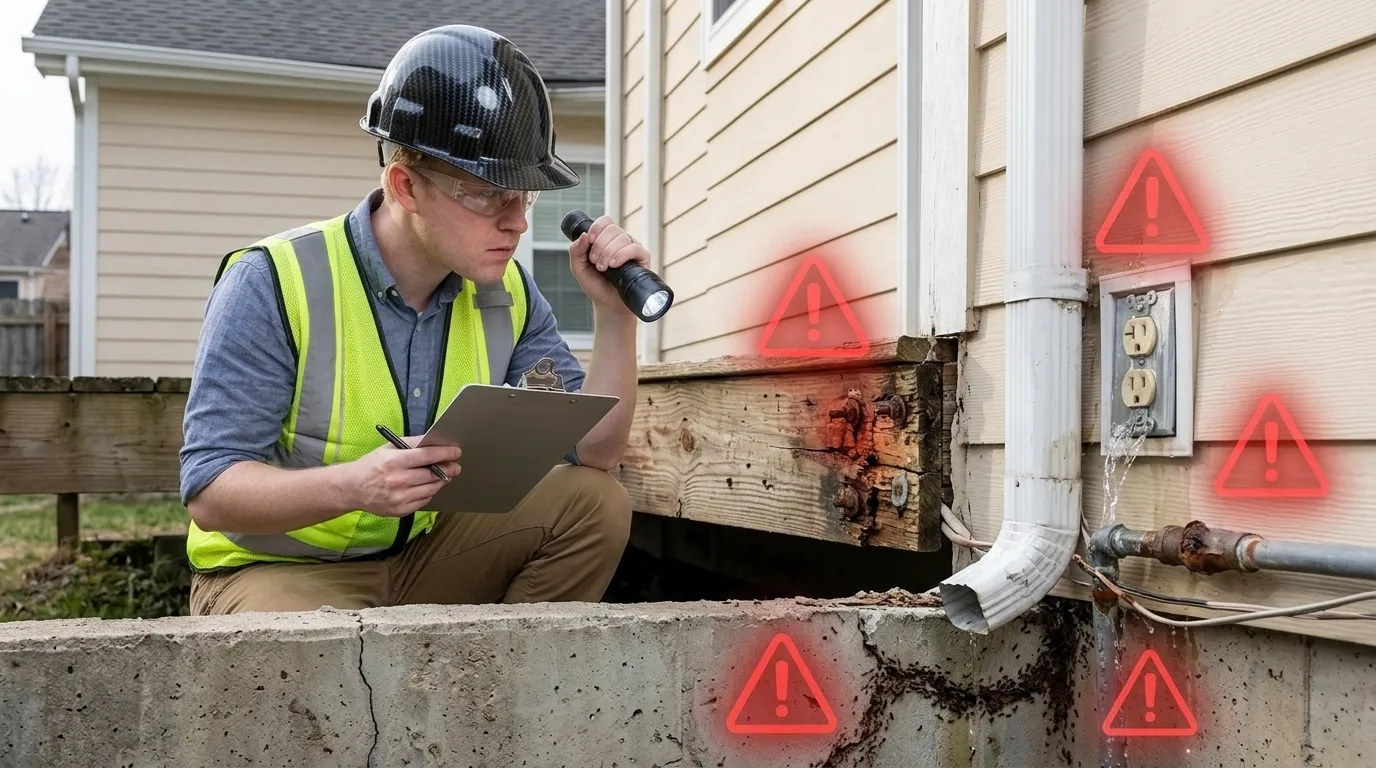
Buying a home is an emotional journey. You spend weeks searching, walking through beautifully staged houses, and imagining your future in a new living room. You finally find the one that feels just right. The paint is fresh, the floors are shiny, and the kitchen is perfect. You make an offer, full of hope and excitement.
Then comes the property condition assessment. This is the moment where the dream meets reality. At DeepSeek Home Inspections, we often see the look of shock on a buyer’s face when we uncover the hidden truths beneath that fresh paint. Sometimes, the issues we find are minor and easy to fix. But other times, we find massive, expensive, and dangerous problems. These are the red flags that can turn your dream home into a financial nightmare.
Knowing how to spot these warning signs is crucial. Not every problem is a reason to panic, but some are definitely a reason to walk away. Let us explore the biggest red flags in a property condition assessment, so you know exactly when to protect your wallet and your family by stepping back from the deal.
Don’t Let Hidden Problems Become Costly Surprises
A beautiful home can hide serious structural, electrical, plumbing, or moisture issues that could cost you thousands after closing. DeepSeek Home Inspections performs a thorough, detail-focused inspection to uncover the red flags before you commit, giving you the confidence to negotiate, request repairs, or walk away when necessary.
Get Your Free Inspection QuoteRed Flag Number One: Foundation and Structural Failure
The foundation is the skeleton of the home. If the bones are broken, the entire body is at risk. Foundation problems are arguably the most expensive and stressful issues a homeowner can face.
During a deep investigation, our inspectors look for several warning signs of structural distress:
- Large Stair Step Cracks: Small hairline cracks in the walls are normal as a house settles. However, large cracks that look like stair steps in the brick or concrete blocks are a major warning. They indicate significant movement.
- Bowing Walls: If the basement walls are bulging inward, the pressure from the soil outside is literally crushing the house. This requires immediate, costly engineering fixes.
- Sloping Floors: If you place a marble on the floor and it rolls quickly to one side, the foundation may be sinking unevenly.
Why this is a dealbreaker: Foundation repairs can easily cost tens of thousands of dollars. In severe cases, the home may need to be lifted off the ground entirely to repair the base. If the structural integrity is compromised, no amount of cosmetic updating will make the home safe or valuable.
Red Flag Number Two: Hidden Water Damage and Mold
Water is a home’s worst enemy. It silently destroys wood, creates health hazards, and attracts pests. A fresh coat of paint can easily cover up water stains on a ceiling, but it cannot stop the leak that caused them.
Our DeepSeek inspectors seek deep into the signs of moisture intrusion:
- Musty Odors: If a basement or bathroom smells like wet socks or dirt, mold is almost certainly growing nearby, even if you cannot see it.
- Soft or Sagging Floors: When you walk across a floor and feel a soft bounce or a dip, the wooden joists underneath may be rotting from water exposure.
- Efflorescence: This is a white, powdery substance found on basement walls. It means water is seeping through the concrete and leaving mineral deposits behind.
- Visible Mold Growth: Black, green, or white spots on walls, ceilings, or around windows are major red flags.
Why this is a dealbreaker: Mold is not just a cosmetic issue. It can cause severe respiratory problems, especially for children and older adults. Removing mold properly requires professional remediation, which is expensive. If the water source is not stopped, the mold will simply return. A house with chronic water intrusion is a constant battle you do not want to fight.
Red Flag Number Three: Dangerous Electrical Systems
Electricity makes our lives comfortable, but faulty wiring makes our homes dangerous. Outdated or poorly installed electrical systems are one of the leading causes of residential fires.
We frequently uncover these electrical red flags:
- Outdated Panels: Certain brands of electrical panels, like Federal Pacific Electric or Zinsco, are known to fail during overloads. Instead of tripping the breaker to protect the house, they can catch fire. If we find one of these panels, it is an immediate safety hazard.
- Aluminum Wiring: Homes built in the 1960s and 1970s sometimes used aluminum wiring instead of copper. Aluminum expands and contracts more, leading to loose connections and fire risks at outlets and switches.
- Double Tapping: This is when two wires are connected to a single circuit breaker that is only designed for one. This overload can cause the wire to heat up and melt.
- Missing Ground Fault Circuit Interrupters (GFCIs): GFCIs are the special outlets that protect you from shock near water, like in kitchens and bathrooms. If a home lacks these near water sources, it is dangerously out of code.
Why this is a dealbreaker: You cannot simply live with bad electrical wiring. The risk of a house fire is too high. Rewiring an entire home is an incredibly expensive and messy project that requires tearing open walls and ceilings. It is rarely worth the risk or the cost for a new buyer.
Red Flag Number Four: A Roof at the End of Its Life
Your roof is the shield that protects everything else in the home. If the roof fails, water pours in, destroying the attic, the ceilings, the walls, and your personal belongings.
Warning signs of a failing roof include:
- Multiple Layers of Shingles: Some homeowners just add a new layer of shingles over the old one instead of doing a proper tear off. Having two or three layers adds massive weight to the roof structure and hides the rot underneath.
- Curling, Cracking, or Missing Shingles: This shows the material is deteriorating and no longer providing a watertight seal.
- Sagging Rooflines: If the roof looks wavy or dips in the middle, the wooden decking underneath is likely rotting or the structure is failing.
- Granules in the Gutters: As asphalt shingles age, they shed their protective granules. Finding large piles of these in the gutters means the roof is washing away.
Why this is a dealbreaker: A full roof replacement can cost as much as a new car, often ranging from ten thousand to twenty thousand dollars or more depending on the size. If the roof is actively leaking and the wood underneath is damaged, the costs skyrocket. Buying a home with a dead roof means you are taking on an immediate, massive expense.
Red Flag Number Five: Shoddy Flips and Unpermitted DIY Work
The real estate market has seen a surge in house flipping. An investor buys a rundown home, updates the cosmetics, and sells it for a premium. Unfortunately, many flippers prioritize looks over safety to maximize their profit.
Here is how we spot a bad flip:
- Cosmetic Cover Ups: Fresh paint over water stains, new flooring hiding rotted subfloors, or cheap cabinets installed over crumbling walls. The flipper is hiding the disease, not curing it.
- Unpermitted Additions: If the seller added a room, a bathroom, or converted a garage without getting city permits, there is no way to know if the work is safe or legal. Unpermitted work often means bad wiring, poor plumbing, and structural weaknesses.
- Inconsistent Quality: If the kitchen looks like a million dollars but the basement looks like a horror movie, the owner only invested in the areas that catch a buyer’s eye.
Why this is a dealbreaker: Shoddy flips are dangerous because the problems are deliberately concealed. You might move in and discover that the beautiful bathroom drains into the yard, or the new bedroom has no heating. Unpermitted work can also cause huge problems when you try to sell the home later, or even result in the city forcing you to tear the addition down.
When Should You Actually Walk Away?
Finding a red flag does not always mean you have to run away screaming. It means you need to pause, ask questions, and do more research. Here is our advice on when to walk away versus when to negotiate.
Walk Away When:
- The problem affects the health or safety of your family (like toxic mold or dangerous electrical panels).
- The repair costs are so high they exceed your budget, even if the seller gives you a credit.
- The problem is systemic (like a foundation that is still actively sinking). Fixing it once will not solve the issue if the ground is unstable.
- The seller refuses to allow a specialist to evaluate the problem further. If they say no to additional inspections, they are likely hiding the true extent of the damage.
Negotiate When:
- The problem is isolated and fixable (like one cracked window or a single leaky faucet).
- The item is near the end of its life but still functioning safely today (like an older furnace that works but will need replacement in a few years). You can ask for a price credit to cover the future replacement.
- The seller is transparent, willing to provide repair receipts from licensed contractors, and open to fixing the issues before closing.
The Power of a Deep Investigation
Walking away from a house you love is heartbreaking. However, walking into a house that bankrupts you or puts your family in danger is far worse. A property condition assessment is not just a hurdle to jump over on the way to closing. It is your ultimate shield.
At DeepSeek Home Inspections, we do not just look at the surface. We seek deep into the structure, the mechanics, and the hidden spaces of the home. We uncover the truths that sellers and cosmetic renovations try to hide. Our goal is not to kill your deal, but to give you the facts you need to make a smart, safe, and confident decision.
If you are buying a home, do not rely on appearances alone. Trust a professional deep investigation. Contact DeepSeek Home Inspections today. Let us uncover the red flags before you sign on the dotted line, so you can invest your money in a home that will truly protect you for years to come.


