
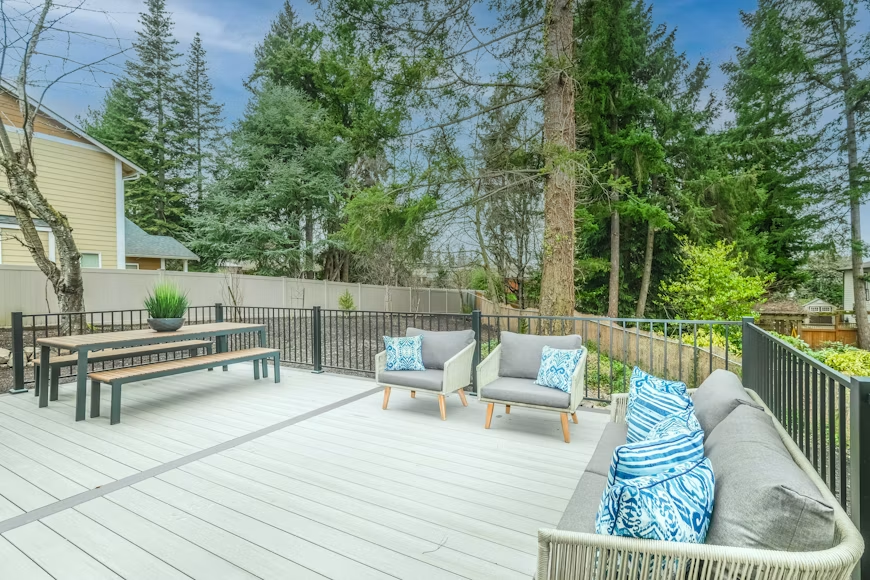
A deck is one of the most valuable additions a Maryland homeowner can make to a property, offering extra living space and a strong return on investment. But a deck is also a structure that carries real weight, real people, and real risk if it is not built and maintained to code. Every year, deck collapses and railing failures across the country send people to the emergency room, and many of these incidents trace back to decks that were never properly permitted, inspected, or maintained. This is exactly why a deck safety code inspection in Maryland is not just a bureaucratic formality — it is a critical safeguard for your family, your guests, and your investment.
Whether you are buying a home with an existing deck, planning to build a new one, or simply want peace of mind about a deck you already own, understanding how Maryland’s deck safety codes work will help you avoid costly surprises. In this guide, we will walk through Maryland’s building code framework, the specific safety requirements inspectors look for, the step-by-step inspection process, and how working with a qualified inspector protects you long after the ink on the permit has dried.
Why Deck Safety Code Inspections Matter in Maryland
Maryland’s climate, with its humid summers, freeze-thaw winters, and proximity to the Chesapeake Bay, is tough on outdoor wood and composite structures. Moisture intrusion, rot, corroded fasteners, and frost heave can all silently weaken a deck’s structural connections over time. A deck safety code inspection is designed to catch these issues before they become dangerous, verifying that ledger board attachments, footings, guardrails, and stairs all meet the standards required to safely support the loads placed on them.
For homebuyers, an existing deck without permit records or inspection history is a red flag worth investigating before closing. A comprehensive home inspection that includes a close look at deck framing, connections, and guardrails can reveal deferred maintenance or code violations that might otherwise stay hidden until something fails.
Maryland’s Building Code Framework
Maryland does not leave building safety entirely up to individual towns and cities. The state’s Maryland Building Performance Standards (MBPS) require every jurisdiction in the state to enforce the same baseline building code, which today is built on the 2018 International Residential Code (IRC) and 2018 International Building Code (IBC), each with Maryland-specific amendments. This creates a guaranteed statewide floor for deck construction standards, no matter which county you live in.
That said, counties and municipalities are permitted to adopt local amendments as long as those amendments are at least as strict as the statewide code. In practice, this means your neighbor’s deck in the next county over might face slightly different requirements for wind resistance, snow load, or material specifications, even though both decks are built on the same IRC foundation. Because of this, always confirm the specific local amendments that apply to your address before finalizing deck plans.
County-Level Permitting in Maryland
Permitting, plan review, and inspections for decks are handled at the county level through each county’s Department of Permitting Services, not by individual cities. This is a meaningful distinction from states where cities run their own separate building departments. Here is how a few of Maryland’s counties typically handle deck permits:
Montgomery County: The Department of Permitting Services (DPS) requires a building permit for essentially all decks regardless of height, and is known for thorough plan reviews and inspections.
Baltimore County: Permits are managed by the Permits & Development Management department, with fees generally ranging from $150 to $400 depending on project scope.
- Anne Arundel County: The Inspections & Permits department handles deck permitting and can walk homeowners through specific local requirements.
- Carroll County: Deck construction is treated as a home addition, requiring both a permit and a series of inspections at defined stages of construction.
Most Maryland counties require a permit once a deck exceeds a certain size or height above grade — commonly decks over 200 square feet or more than 30 inches above grade — though the exact thresholds vary. Because enforcement and fee structures differ from county to county, it always pays to confirm requirements with your local permitting office, or to work with a licensed contractor who already knows the local rules.
Key Deck Safety Code Requirements Inspectors Look For
A deck safety code inspection in Maryland examines several categories of structural and safety elements. Understanding these requirements ahead of time helps homeowners and contractors avoid failed inspections and costly rework.
Guardrails and Baluster Spacing
Guardrails are one of the most heavily scrutinized safety features on any deck. Under Maryland’s adopted code, guardrails are required whenever a deck sits 30 inches or more above the ground, and they must be engineered to withstand a 200-pound concentrated load applied horizontally or vertically. Baluster and infill spacing must follow the well-known 4-inch sphere rule: no opening in the guardrail should allow a 4-inch sphere to pass through, a standard designed specifically to prevent young children from slipping through or becoming trapped. For cable railing systems, this rule applies even when cables deflect under pressure, which is why proper post spacing (typically 4 to 6 feet, depending on cable diameter and tensioning hardware) and correct tensioning are essential to passing inspection.
Stair Dimensions
Deck stairs must meet minimum tread depth and maximum riser height requirements based on the IRC. In general, tread depth must be at least 10 inches (measured nosing to nosing), and riser height cannot exceed 7 and three-quarter inches. Stair railings must follow the same 4-inch spacing rule as deck guardrails, ensuring consistent protection throughout the structure.
Ledger Board Attachment
The ledger board — the piece that connects a deck to the house — is one of the most common points of catastrophic failure when installed incorrectly. Nails are not considered adequate fasteners for ledger board attachment under current standards; structural screws or through-bolts are required instead. Inspectors pay close attention to flashing details as well, since water intrusion behind an improperly flashed ledger board is a leading cause of hidden rot and eventual structural failure.
Footings and Frost Depth
Maryland’s winters mean footings must be set below the local frost line to prevent frost heave from shifting and destabilizing the deck’s support posts over time. Frost depth requirements vary somewhat by region within the state, and inspectors will verify footing depth during the early stages of construction, before the ground is closed back up, which is why a footing inspection typically happens before any framing begins.
Load-Bearing Capacity and Materials
Maryland’s codes require decks to be engineered to handle concentrated loads of at least 200 pounds per square foot in relevant areas, along with the general live and dead load requirements found throughout the IRC. All wood exposed to the elements must be pressure-treated or otherwise rated for ground contact, since untreated lumber deteriorates quickly in Maryland’s humid climate and is far more prone to insect damage and rot.
The Deck Inspection Process, Step by Step
Once a deck permit is approved in Maryland, the project typically moves through several distinct inspection checkpoints rather than a single final walkthrough. This staged approach lets inspectors verify structural elements before they are covered up or become difficult to access.
- Footing inspection: Confirms footing depth, diameter, and placement before concrete is poured or the excavation is backfilled.
- Framing inspection: Reviews joist spacing, beam sizing, ledger board attachment, flashing, and post connections before decking boards are installed.
- Final inspection: Verifies guardrail height and spacing, stair dimensions, structural connections, and overall compliance once construction is complete.
Some counties allow framing and final inspections to be combined for lower decks, while taller decks — for example, those requiring a landing well above grade — typically need each stage inspected separately. Skipping or failing any of these checkpoints can delay your certificate of occupancy or, worse, leave hidden structural issues that surface only after years of use.
Common Deck Safety Violations Found During Inspections
Even well-intentioned DIY builders and experienced contractors run into recurring problems that trigger a failed deck inspection in Maryland. Being aware of these common pitfalls can save significant time and expense:
Missing or inadequate post-to-beam and beam-to-ledger structural connectors.
Ledger boards attached with nails instead of structural screws or bolts, or missing proper flashing.
Guardrail openings that exceed the 4-inch sphere rule, especially on cable or horizontal-baluster designs.
Footings poured above the required frost depth, risking future heave and post movement.
Undersized joists or beams for the actual span and load of the deck.
Stairs with inconsistent riser heights or tread depths that fall outside code tolerances.
Any one of these issues can cause an inspector to red-tag a project, requiring rework before construction can proceed or before an occupancy sign-off is granted.
Why Hire a Professional for a Deck Safety Code Inspection in Maryland
Building department inspections confirm that a new deck meets minimum code at the moment of construction, but they don’t tell you how a deck is holding up years later, or whether an older, unpermitted deck was ever built correctly in the first place. This is where an independent, professional deck inspection adds real value. A qualified inspector evaluates current structural condition, fastener corrosion, wood decay, guardrail stability, and connection integrity, going beyond a simple code checklist to assess how safe the deck actually is to use today.
This is especially important during a real estate transaction. Older decks, decks built without permits, or decks that have never been re-evaluated since installation are common findings during pre-purchase home inspections throughout Maryland. Because deck failures are almost always preventable with proper inspection, catching problems before closing gives buyers real negotiating leverage and gives sellers a chance to address issues proactively.
How Deepseek Home Inspections Can Help
At Deepseek Home Inspections, deck evaluation is a standard part of a thorough property assessment, not an afterthought. Our inspectors examine ledger board attachment, footing condition, guardrail and baluster spacing, stair dimensions, fastener corrosion, and overall structural stability, comparing what we find against current Maryland code requirements and sound building practices.
If you are buying a home with a deck, building a new one, or simply want confidence that your existing deck is safe for another season of gatherings, our deck and structural inspection services give you a clear, documented picture of exactly where things stand. We also offer related services such as mold inspections and radon testing, since moisture problems around decks and lower-level living spaces often go hand in hand.
- Cracked, leaning, or shifting support posts and footings.
- Standing water or persistent moisture underneath the deck structure.
Any of these signs on their own may seem minor, but together they often point to a structure that has quietly drifted out of compliance with the safety standards it was originally built to meet. Addressing these issues early, before a gathering puts real weight and real people on the structure, is always safer and less expensive than dealing with a failure after the fact.
Frequently Asked Questions
Do I need a permit for every deck in Maryland?
Most counties require a permit once a deck exceeds roughly 200 square feet or sits more than 30 inches above grade, but Montgomery County requires a permit for virtually all decks regardless of height. Always confirm the exact threshold with your local Department of Permitting Services.
What is the 4-inch sphere rule?
It is the standard used to check guardrail and baluster spacing: no gap in the railing system should allow a 4-inch sphere to pass through at any point, a measure intended to prevent young children from slipping through or getting stuck.
How high must a deck be before a guardrail is required?
Under Maryland’s adopted code, a guardrail is generally required once a deck’s walking surface is 30 inches or more above the ground or floor below.
Can I use nails to attach a ledger board?
- Cracked, leaning, or shifting support posts and footings.
- Standing water or persistent moisture underneath the deck structure.
Any of these signs on their own may seem minor, but together they often point to a structure that has quietly drifted out of compliance with the safety standards it was originally built to meet. Addressing these issues early, before a gathering puts real weight and real people on the structure, is always safer and less expensive than dealing with a failure after the fact.
Frequently Asked Questions
Do I need a permit for every deck in Maryland?
Most counties require a permit once a deck exceeds roughly 200 square feet or sits more than 30 inches above grade, but Montgomery County requires a permit for virtually all decks regardless of height. Always confirm the exact threshold with your local Department of Permitting Services.
What is the 4-inch sphere rule?
It is the standard used to check guardrail and baluster spacing: no gap in the railing system should allow a 4-inch sphere to pass through at any point, a measure intended to prevent young children from slipping through or getting stuck.
How high must a deck be before a guardrail is required?
Under Maryland’s adopted code, a guardrail is generally required once a deck’s walking surface is 30 inches or more above the ground or floor below.
Can I use nails to attach a ledger board?
No. Nails are not considered an adequate fastening method for ledger board attachment. Structural screws or through-bolts, combined with correct flashing, are required to safely transfer the deck’s load to the house.
What happens if my deck fails inspection?
The inspector will identify the specific code deficiencies, and the builder or homeowner must correct them before the project can proceed to the next inspection stage or receive final sign-off.
Final Thoughts
A deck safety code inspection in Maryland is about far more than satisfying a permitting requirement — it is about making sure a structure built to hold your family and friends can actually do so safely, season after season. From footing depth and ledger board attachment to guardrail spacing and stair dimensions, Maryland’s code requirements exist because deck failures are almost always preventable with the right attention to detail. Whether you are permitting a new build, buying a home with an existing deck, or simply want peace of mind about a structure you already own, a professional evaluation from Deepseek Home Inspections gives you the clarity you need to enjoy your outdoor space with confidence.


