
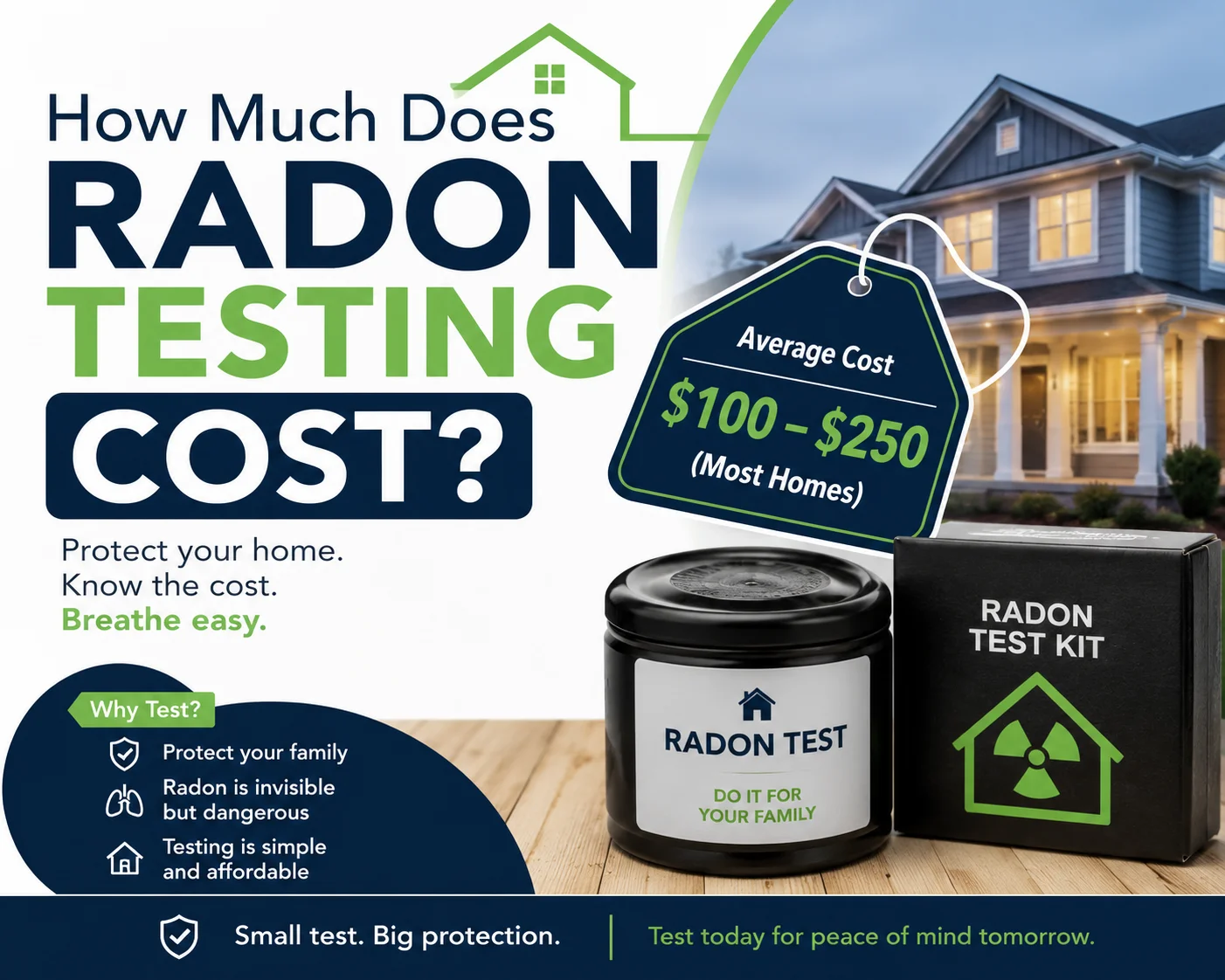
Radon is an invisible, odorless gas that seeps into homes from the ground — and it’s the second-leading cause of lung cancer in the United States after smoking. If you’re buying, selling, or simply want peace of mind about your home’s air quality, radon testing is one of the smartest, most affordable safety checks you can make. But how much does it actually cost?
In this guide, we’ll break down radon testing prices in 2026, compare DIY kits versus professional testing, explain what affects the price, and help you decide which option makes sense for your home in Maryland.
Why Radon Testing Matters
Radon forms naturally when uranium in soil and rock breaks down, and it can seep into homes through foundation cracks, sump pits, and gaps around pipes. Because it has no smell, color, or taste, the only way to know if it’s present is to test for it. The EPA estimates radon exposure contributes to roughly 21,000 lung cancer deaths in the U.S. every year, making it a far more serious hazard than most homeowners realize.
Unlike many home safety issues, radon isn’t something you can spot during a walkthrough — it doesn’t show up as a stain, crack, or odor. That’s exactly why testing is so important, and why the relatively small cost of a test is such a worthwhile investment compared to the potential health risks of an untested home.
Quick Answer: Average Radon Testing Cost
On average, professional radon testing costs between $150 and $400, with most homeowners paying around $250 for a standard short-term test. DIY test kits are much cheaper, typically running $15 to $50, including lab analysis. Larger homes, multi-story properties, or real estate transactions that require certified documentation can push costs toward $500–$700.
Here’s a quick breakdown of what you can expect to pay depending on the testing method:
| Testing Method | Typical Cost | Turnaround Time |
|---|---|---|
| DIY charcoal test kit | $15 – $35 | 2–7 days |
| DIY alpha-track (long-term) kit | $25 – $50 | 90 days – 1 year |
| Professional short-term test | $150 – $300 | 2–7 days |
| Continuous radon monitor (CRM) | $200 – $400 | 48 hours |
| Long-term professional test | $200 – $400 | 90+ days |
| Large/multi-story home (multiple devices) | Up to $700 | Varies |
Below, we’ll go deeper into why prices vary and what actually determines what you’ll pay.
DIY Radon Test Kits: The Budget Option
If you just want a general sense of your home’s radon levels, a DIY kit is the cheapest way to get started. These kits typically use one of two methods:
- Short-term charcoal canisters ($15–$35): You place the canister in the lowest livable level of your home for 2–7 days under closed-house conditions, then mail it to a lab for analysis. Results usually come back within a week or two.
- Long-term alpha-track detectors ($25–$50): These stay in place for 90 days to a year and give a more accurate picture of your home’s average radon exposure, since radon levels naturally fluctuate by season.
DIY kits are a reasonable starting point for homeowners who simply want to check their own house. However, there’s an important catch: most states, including Maryland, don’t accept DIY test results for real estate transactions. If you’re buying or selling a home, lenders, title companies, and real estate agents typically require a certified, third-party test performed by a licensed measurement provider.
DIY kits also carry a higher risk of user error — incorrect placement, opening windows during the test period, or mailing delays can all skew results. If your first test comes back elevated, you’ll likely need a follow-up test anyway, which can end up costing more in the long run than simply hiring a professional the first time.
Professional Radon Testing: What You’re Paying For
A professional radon test typically costs $150 to $400, and that price covers more than just the device sitting in your basement. Here’s what’s actually included:
- Certified equipment placement. A licensed inspector places EPA-protocol devices in the correct locations (usually the lowest livable level of the home) to ensure accurate, tamper-resistant results.
- Continuous radon monitors (CRMs). Many professionals use electronic CRMs that record radon levels hour by hour and flag any tampering, such as a door or window being opened during the test. These devices provide same-day or 48-hour results, which is ideal for real estate deadlines.
- Certified documentation. Real estate transactions almost always require a signed report from an NRPP- or NRSB-certified provider. This report is what your lender, buyer, or seller will actually rely on.
- Professional interpretation. A licensed inspector can explain what your results mean and recommend next steps, such as radon mitigation, if levels come back at or above the EPA’s action level of 4.0 pCi/L.
If you’re already scheduling a general home inspection, many companies — including ours — offer radon testing as an add-on, which can save you money compared to booking it separately.
What Affects the Cost of Radon Testing?
Several factors influence how much you’ll pay for a radon test:
Home size and layout. Larger homes, especially those with multiple foundation types (basement, crawl space, slab) or several livable levels, may require more than one testing device to get an accurate reading. This can push costs toward the higher end of the range, sometimes up to $700.
Test type. Short-term tests are generally cheaper than continuous monitoring or long-term alpha-track testing, but they’re also less accurate since radon levels shift with the seasons.
Turnaround time. Need results fast for a closing deadline? Expedited testing with a continuous monitor typically costs more than a standard multi-day charcoal test.
Bundled services. Combining radon testing with a general home inspection or mold inspection often costs less overall than booking each service separately, since the inspector is already on-site.
Regional pricing. Costs can vary by state and even by county due to labor rates, lab proximity, and local demand. In Maryland, where radon levels can be elevated in certain regions due to local geology, testing is a routine part of most home inspections.
Real estate requirements. If a test is being conducted for a home sale, lenders and title companies typically require certified professional testing with a documented chain of custody — this adds a small premium over a basic DIY-level test but is often non-negotiable for closing.
DIY vs. Professional: Which Should You Choose?
| DIY Kit | Professional Test | |
|---|---|---|
| Cost | $15–$50 | $150–$400 |
| Accuracy | Moderate (user error risk) | High (certified placement) |
| Accepted for real estate transactions | Rarely | Yes |
| Turnaround | 1–2 weeks | 48 hours – 7 days |
| Best for | General awareness | Home sales, high-stakes decisions |
If you’re simply curious about your home’s radon levels and have no immediate plans to sell, a DIY kit is a low-cost way to get a baseline reading. But if you’re buying or selling a home in Maryland, or if a previous test came back elevated, professional testing is worth the extra cost — it’s certified, more accurate, and accepted by lenders and real estate agents.
What Happens If Your Radon Levels Are Elevated?
The EPA recommends taking action if your radon level is at or above 4.0 picocuries per liter (pCi/L). If your test comes back elevated, the next step is typically radon mitigation — installing a ventilation system that redirects radon gas from beneath your home to the outside air before it can accumulate indoors.
Mitigation systems generally cost between $800 and $2,500 depending on your home’s foundation and layout, and most homes only need the system installed once. After mitigation, a follow-up radon test confirms the system is working and levels have dropped to a safe range.
It’s worth noting that elevated radon doesn’t mean anything is “wrong” with your home structurally — it’s simply a reflection of local soil and rock composition, which is common throughout parts of Maryland. The important part is testing regularly and addressing it if levels are high.
If you’re in the middle of a real estate transaction and your test comes back elevated, don’t panic. Radon mitigation is a routine, well-understood process, and many home sales move forward with the cost of mitigation negotiated between buyer and seller. A licensed contractor can typically complete the installation within a day, and most systems require little to no ongoing maintenance beyond an occasional check of the system’s pressure gauge.
How Often Should You Test for Radon?
The EPA recommends retesting your home:
- Every 2 years, even if a previous test came back normal, since radon levels can change over time.
- After any major renovation, especially work involving the foundation, basement, or HVAC system.
- After installing a radon mitigation system, to confirm it’s working properly.
- Before selling your home, since most buyers and lenders will require a current, certified test.
Radon Testing in Maryland
Radon exposure is a genuine concern across much of Maryland due to the region’s underlying geology, and testing is a standard part of the home buying and selling process here. Whether you’re located in Baltimore, Waldorf, Odenton, Crofton, Clarksburg, or elsewhere in the state, a certified radon test gives you documentation that satisfies lenders, title companies, and real estate agents — something a DIY kit typically can’t provide.
At DeepSeek Home Inspections, we offer professional radon testing throughout Maryland using continuous radon monitors that deliver fast, accurate, tamper-resistant results. Radon testing can also be bundled with a general home inspection, mold inspection, or termite inspection to save you time and money if you’re already in the process of buying or selling a home.
Frequently Asked Questions
Is radon testing worth the cost? Yes. Given that radon is a leading cause of lung cancer and testing costs a fraction of what mitigation or medical costs could be down the line, it’s one of the most cost-effective safety checks you can do for your home.
Can I test for radon myself instead of hiring a professional? You can, and DIY kits are a fine way to get a general reading. But if you’re buying, selling, or need certified documentation, a professional test is typically required.
How long does a professional radon test take? Most professional tests using continuous radon monitors are completed within 48 hours. Short-term charcoal tests take 2–7 days, and long-term tests can run 90 days or more.
Does radon testing cost more for bigger homes? Yes, larger or multi-level homes may require multiple testing devices to get accurate readings across different areas of the house, which can raise the overall cost.
What’s the difference between radon testing and radon mitigation? Testing measures the radon levels in your home. Mitigation is the process of installing a system to reduce those levels if they’re found to be elevated. Testing is the first step; mitigation is only needed if your results warrant it.
Ready to Schedule a Radon Test?
Whether you’re preparing to sell your home, closing on a new purchase, or simply want peace of mind, getting a certified radon test is a small investment with a big payoff. Schedule an inspection with our certified team today, or contact us to learn more about our radon testing and home inspection services across Maryland.


