
If you’re buying or selling a home anywhere in Maryland, you’ve probably come across the term “48 hour radon test.” It sounds technical, but it’s actually one of the simplest and most important health-related steps in a real estate transaction. Radon is a naturally occurring radioactive gas that you can’t see, smell, or taste — yet it’s the second leading cause of lung cancer in the United States after smoking. Maryland’s geology, particularly the rock formations found across Baltimore, Howard, Montgomery, and Frederick counties, puts many homes at elevated risk.
This guide walks you through exactly what a 48 hour radon test in Maryland involves, why it matters, what the results mean, and what to do if your home tests high. Whether you’re a buyer trying to protect your family, a seller preparing to list, or a homeowner who’s simply curious, this article covers everything you need.
What Is a 48 Hour Radon Test?
A 48 hour radon test is a short-term measurement method used to determine the average radon concentration in a home over a two-day period. Radon levels naturally fluctuate throughout the day depending on temperature, air pressure, ventilation, and even the weather, so testing for a minimum of 48 hours gives a far more reliable snapshot than a quick one-hour reading.
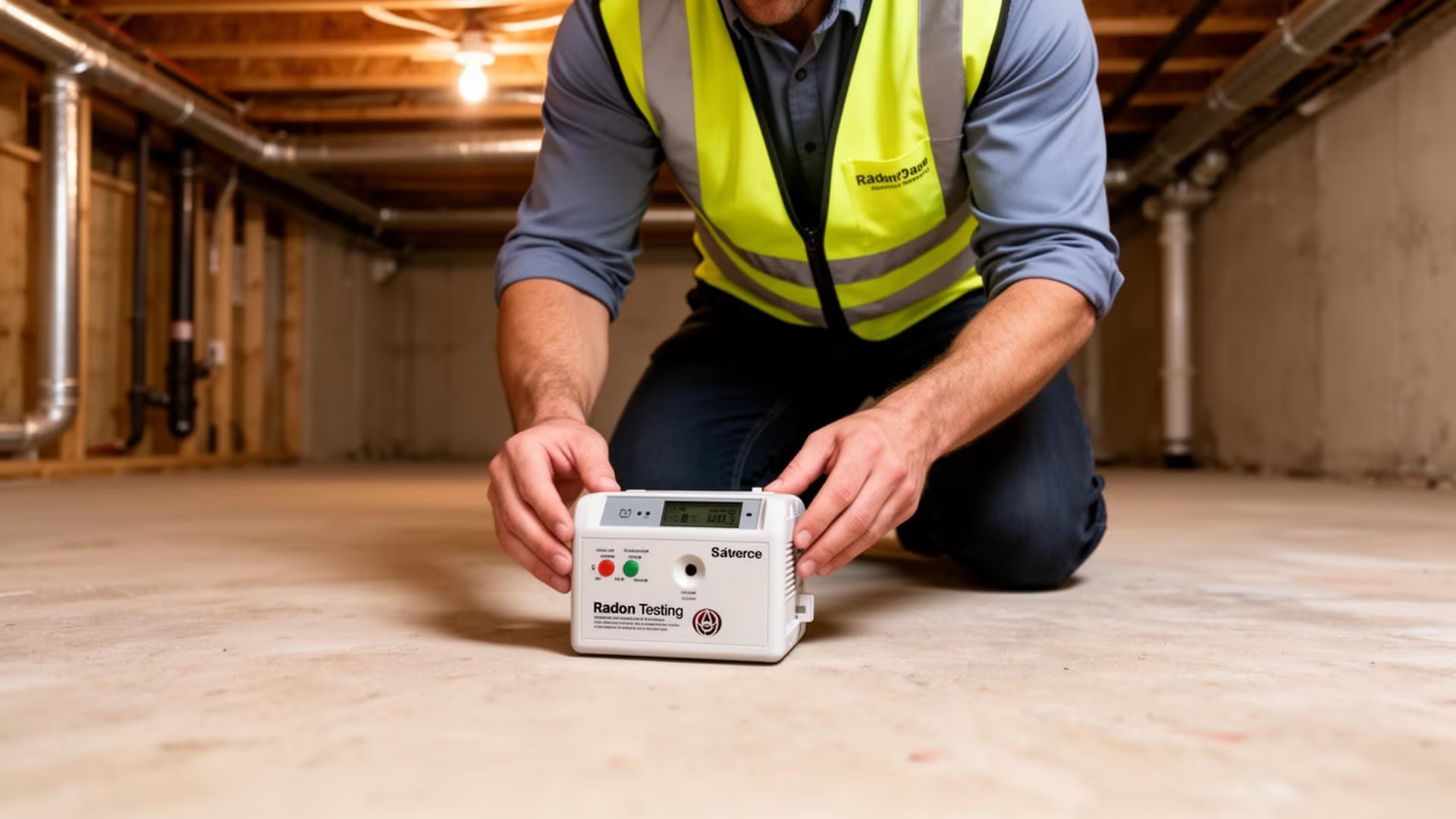
During a professional radon testing appointment, a certified inspector places one or two continuous radon monitors, or E-Perm/charcoal canisters, in the lowest livable level of the home — typically the basement. If there’s no basement, the device is placed at ground level. The equipment stays untouched for a minimum of 48 hours, collecting hourly air samples the entire time. Once the test period ends, the inspector retrieves the device and either downloads the results immediately (with electronic monitors) or sends canisters to a lab for analysis.
This is the industry-standard method recognized by the EPA and the Maryland Department of the Environment, and it’s the method almost universally required for real estate transactions.
Why 48 Hours Specifically?
You might wonder why the test can’t be shorter. Radon levels can spike or dip within just a few hours because of wind, barometric pressure changes, or even someone opening a door. A 48-hour window smooths out those short-term fluctuations and produces an average that’s statistically much closer to the home’s true radon exposure. It’s also long enough to meet EPA protocol for short-term testing, which is the standard lenders, real estate agents, and most Maryland jurisdictions expect to see in a purchase agreement.
Is Radon Testing Required When Buying a Home in Maryland?
This is one of the most common questions buyers ask. <cite index=”2-1″>Maryland does not have a statewide legal requirement for radon testing during real estate transactions</cite>, but <cite index=”4-1″>Montgomery County is one of the only jurisdictions in the state that legally requires radon testing before the sale of any single-family home or townhome</cite>, a rule that has been in place since October 2016. <cite index=”4-1″>The test must be completed within one year of settlement</cite>, and if a recent test already exists on file for the property, it can satisfy the legal requirement without a retest.
Even outside Montgomery County, <cite index=”2-1″>the EPA and the Maryland Department of Health strongly recommend radon testing before purchasing any home</cite>, and most lenders, agents, and attorneys treat it as standard due diligence. Many buyers across Baltimore, Howard, Anne Arundel, Frederick, and Prince George’s counties choose to add radon testing to their home inspection regardless of whether it’s legally mandated, simply because it’s inexpensive peace of mind compared to the potential health and resale implications.
If you’re buying in Montgomery County specifically, our Odenton and Crofton service areas fall close by, and our team is well versed in the documentation requirements local title companies and agents expect to see at settlement.
What Counts as a “High” Radon Reading?
<cite index=”9-1″>The EPA’s action level is 4 picocuries per liter (pCi/L)</cite>. If your 48-hour test comes back at or above that number, it’s generally recommended that you take a follow-up test — either a second short-term test or a long-term test — to confirm the reading before deciding on mitigation. <cite index=”9-1″>If a follow-up long-term test also comes back at or above 4 pCi/L, mitigation is recommended; if you instead run a second short-term test, the higher that result is, the more confident you can be that mitigation is worthwhile.</cite>
It’s worth noting that there’s technically no “safe” level of radon exposure — the EPA’s 4 pCi/L threshold is an action level, not a safety line drawn in the sand. Many radon professionals and health advocates suggest that even homes testing between 2 and 4 pCi/L could benefit from mitigation, particularly if young children or non-smokers with respiratory sensitivities live in the home.
How Much Does a 48 Hour Radon Test Cost in Maryland?
Pricing varies depending on whether radon testing is bundled with a broader home inspection or booked as a standalone service. Across the DC-Maryland-Virginia region, standalone radon tests typically run somewhere in the $150–$200 range, while bundling it with a full general home inspection often brings the combined cost down. Given that the alternative — an undetected radon problem — can mean thousands of dollars in mitigation costs and a genuine health risk, it’s one of the most cost-effective inspections you can order during a real estate transaction.
Who Pays for the Radon Test?
Typically, whoever orders the test pays for it. If a seller has a test performed before listing the home, they absorb the cost and can market the property with documentation in hand, which can be a meaningful selling point in a competitive market. If a buyer orders the test as part of their due diligence, it’s usually rolled into their overall inspection costs alongside the general home inspection and any mold inspection they choose to add.
DIY Radon Kits vs. Professional Testing
Hardware stores sell inexpensive charcoal-based DIY radon kits, and while they can give you a rough idea of radon levels, they come with real limitations:
- Accuracy — DIY kits are more prone to user error in placement, timing, and handling, which can skew results.
- Turnaround — Results from mail-in DIY kits can take one to two weeks, compared to same-day or next-day results from professional electronic monitors.
- Real estate acceptance — Most lenders, title companies, and purchase agreements require testing performed by a certified, licensed radon professional. A DIY result usually won’t satisfy contract contingencies or hold up in negotiations.
- Tamper protection — Professional electronic monitors are tamper-resistant and track temperature, humidity, and atmospheric pressure alongside radon levels, which adds credibility to the final report.
If you’re in the middle of a purchase contract with a radon contingency, it’s almost always worth using a certified inspector rather than a store-bought kit.
What Happens During the 48-Hour Test Period?
To get an accurate reading, the home needs to be kept under “closed-house conditions” for the entire test — and often for 12 hours beforehand. That means:
- Keep all windows and exterior doors closed, except for normal entry and exit.
- Avoid using exhaust fans excessively, including bathroom fans and kitchen range hoods, since they can pull outside air into the home and skew readings.
- Don’t disturb the testing equipment. Moving, covering, or unplugging the monitor can invalidate the test.
- Keep HVAC systems on their normal setting. You don’t need to shut off heating or air conditioning, just avoid dramatic changes in ventilation.
- Let occupants continue living normally. Radon testing doesn’t require vacating the home — you can go about daily life as long as doors and windows stay closed.
Because these conditions matter so much for accuracy, it’s best to schedule your test through a licensed inspector who can walk you through exactly what to expect and confirm the home was properly prepped beforehand.
What If My Home Tests High?
A reading at or above 4 pCi/L doesn’t mean the home is unsellable or unsafe to live in immediately — it means a mitigation system is recommended. <cite index=”8-1″>A typical radon mitigation system costs somewhere between $800 and $1,200</cite>, and most systems work by using a vent pipe and fan to draw radon gas from beneath the foundation and release it safely above the roofline, away from windows and living spaces.
In a real estate transaction, an elevated radon result often becomes a negotiation point. Buyers frequently ask sellers to install a mitigation system before closing or to provide a credit at settlement so the buyer can handle it afterward. Because the mitigation cost is relatively modest compared to other repair items that come up during a general home inspection, it’s usually a straightforward point to resolve.
Radon Testing for Landlords and Rental Properties
If you own rental property in Maryland, radon isn’t just a real estate transaction issue — it’s an ongoing responsibility. <cite index=”10-1″>The Maryland Department of Health recommends that landlords test rental properties for radon before occupancy or lease renewal, disclose results to current and prospective tenants, and take mitigation steps if levels reach or exceed the EPA’s 4 pCi/L action level.</cite> Keeping documentation on file protects both tenants’ health and the landlord’s legal standing if a dispute arises later.
Why Radon Risk Is Especially Relevant in Maryland
Maryland sits on geology that includes granite, shale, and other rock formations known to produce elevated radon levels, which is why the state falls into higher-risk zones on EPA radon maps. Homes in Baltimore, Howard County, Frederick County, and much of central Maryland are particularly likely to test above the action level, especially homes with basements, crawl spaces, or slab foundations built directly on radon-prone soil. This is one of the main reasons radon testing has become such a routine part of home inspections throughout the state, even where it isn’t legally mandated.
If you want a broader look at inspection standards and requirements specific to your area, our Maryland service area page breaks down what buyers and sellers in Baltimore, Waldorf, Odenton, Crofton, and surrounding communities should expect.
Scheduling a 48 Hour Radon Test
Timing matters, especially if you’re working within a real estate contract deadline. Since the test itself takes a minimum of 48 hours, plus retrieval and reporting time, it’s smart to schedule radon testing as early as possible once you’re under contract — ideally at the same time as your general home inspection, so the inspector can place the monitor while completing the rest of the walkthrough. This approach saves you a second site visit and keeps your transaction timeline on track.
Many buyers also choose to combine radon testing with a mold inspection, since both issues are closely tied to moisture, ventilation, and basement conditions. Addressing indoor air quality as a whole gives you a much clearer picture of the home’s overall health before you close.
Final Thoughts
A 48 hour radon test is a small investment that protects your family’s long-term health and gives you real leverage in a real estate negotiation. Whether you’re required to test because you’re buying in Montgomery County, or you’re simply being cautious as a buyer or seller anywhere else in Maryland, the process is fast, non-invasive, and backed by clear EPA guidelines on what the results mean.
If you’re preparing for a home purchase, sale, or lease renewal and want accurate, certified radon results without the guesswork of a store-bought kit, our team at DeepSeek Home Inspections handles radon testing throughout Maryland, often alongside a full general home inspection. You can browse our full list of inspection services or head straight to our scheduling page to book your 48-hour radon test today. If you still have questions, our FAQ page covers common concerns about pricing, timelines, and what to expect on inspection day.


