
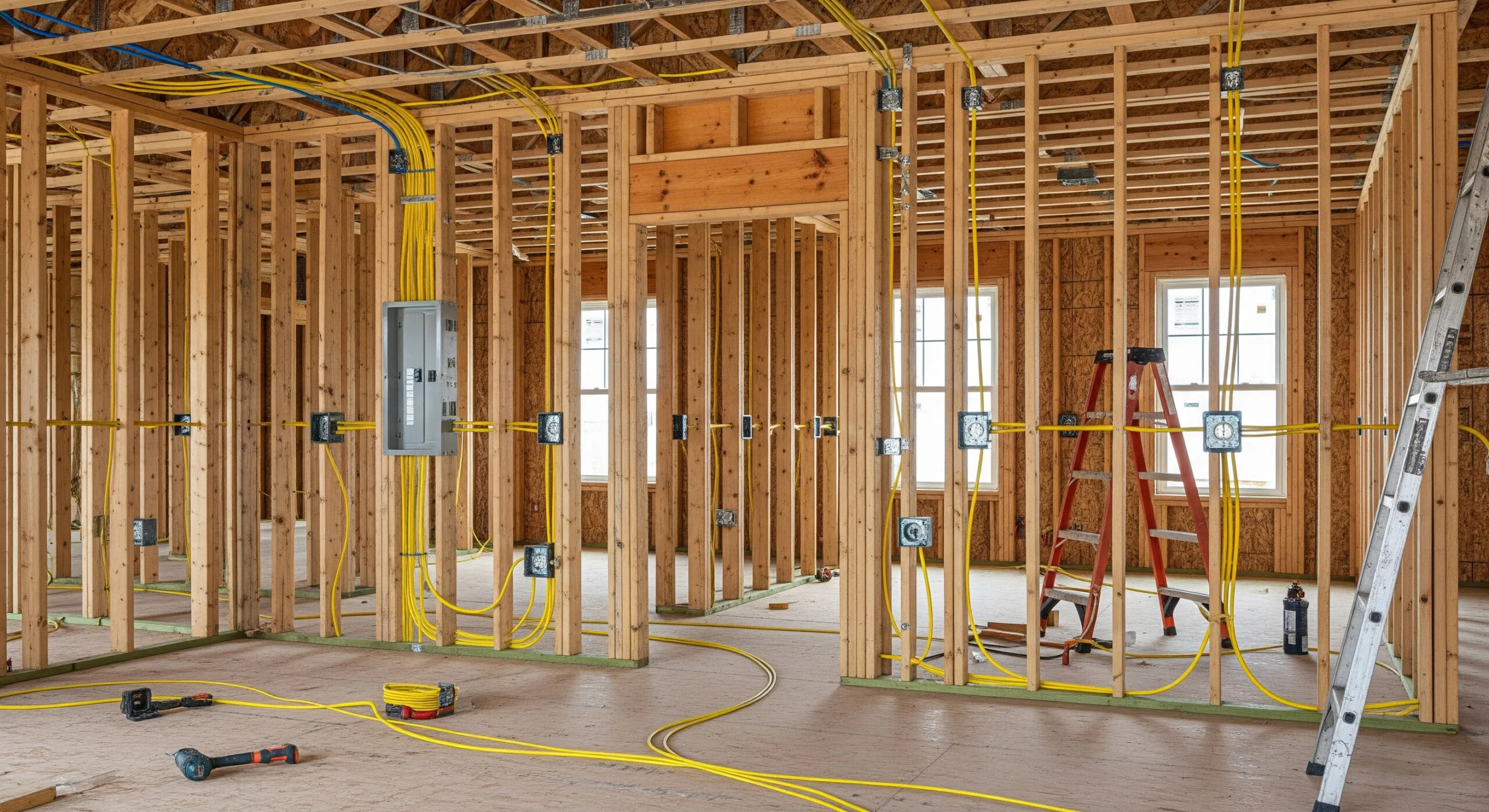
Why a Pre-Drywall Inspection Matters for Maryland Homebuyers
If you’re building a new home anywhere in Maryland, from Baltimore County to Frederick, Howard County, or the growing communities around Clarksburg and Odenton, there’s a brief but critical window during construction when you can still see everything that will eventually be hidden behind drywall. A pre drywall inspection Maryland buyers request during this phase gives an independent, third-party inspector the chance to examine the framing, electrical wiring, plumbing lines, and HVAC ductwork before insulation and sheetrock seal them away for good.
At DeepSeek Home Inspections, our pre-drywall inspection service is one of the most requested inspections among new construction buyers throughout Maryland, precisely because it’s the last chance to verify quality workmanship while corrections are still easy and inexpensive.
What Exactly Is a Pre-Drywall Inspection?
A pre-drywall inspection, sometimes called a rough-in inspection or a pre-drywall walkthrough, takes place after the home’s mechanical systems have been roughed in but before insulation and drywall installation begins. At this stage, the home is essentially an open skeleton: studs, joists, wiring, pipes, and ductwork are all fully exposed and easy to evaluate.
This timing is what makes the inspection so valuable. Once drywall goes up, verifying that framing was done correctly, that wiring was routed safely, or that plumbing was properly supported becomes nearly impossible without cutting into finished walls.
What Gets Checked During a Pre-Drywall Inspection
A qualified inspector walks through the entire structure evaluating several categories of work that will soon be permanently concealed:
- Framing: correct stud spacing, proper header sizing over doors and windows, and solid structural connections
- Electrical rough-in: wiring kept clear of nail plates, correctly placed outlet and switch boxes, and proper grounding
- Plumbing rough-in: secure pipe supports, correct drain line slope, and leak-free fittings
- HVAC ductwork: sealed joints, appropriately sized ducts, and adequate support to prevent sagging over time
- Insulation prep: house wrap, window and door flashing, and air sealing at penetrations
- Fire blocking and draft stopping between floors and within wall cavities
Each of these systems plays a direct role in your home’s safety, energy efficiency, and long-term durability. A skipped fire block or an undersized duct run might seem minor now, but issues like these often surface years later as expensive repairs, higher utility bills, or, in the case of poor electrical work, genuine safety hazards.
Why Maryland’s New Construction Market Makes This Especially Important
Maryland’s new home construction has expanded rapidly in communities across Howard, Frederick, Anne Arundel, and Montgomery counties, often relying on large crews of subcontractors working on tight, overlapping schedules to keep multiple builds moving at once. That pace can be great for meeting move-in deadlines, but it also increases the chance that a rushed subcontractor misses a detail that would otherwise be caught with more time and oversight.
A pre-drywall inspection acts as an independent check on that process, giving buyers a professional, unbiased evaluation that isn’t influenced by the builder’s schedule or bottom line.
Builder Inspections and Municipal Inspections Aren’t the Same Thing
It’s a common misconception that a home doesn’t need an independent pre-drywall inspection because the builder and the local municipality already inspect the work. In reality, municipal inspectors are checking for minimum code compliance only, not overall workmanship or best practices. A builder’s internal quality control team, meanwhile, works for the builder, not for you.
An independent inspector represents only the buyer’s interests. If you’d like to see how this compares to a general home inspection performed on a completed home, our team can walk you through the differences between rough-in and final walkthrough inspections.
Common Issues Found During Pre-Drywall Inspections in Maryland Homes
Across the new construction inspections we perform throughout Maryland, certain issues come up again and again. These include undersized floor joists or headers, electrical wiring drilled too close to the edge of a stud, missing or incomplete fire blocking, plumbing vent pipes installed with incorrect slope, HVAC ducts that are too small for the room they serve, and gaps in house wrap or window flashing that could eventually allow water intrusion.
Because the home is still open at this stage, correcting these issues is typically quick and inexpensive; a subcontractor returns, fixes the specific item, and moves on. Compare that to the cost and disruption of discovering the same issue after move-in, when correcting it might mean cutting open a finished wall or ceiling.
How to Schedule a Pre-Drywall Inspection With Your Builder
Timing is everything with a pre-drywall inspection. Builders move quickly from rough-in to insulation, so buyers need to request access proactively, ideally as a written condition in the purchase agreement. Reputable builders throughout Maryland are generally accustomed to these requests and will coordinate a walkthrough date once the home reaches the right stage of construction.
Once you’re ready to schedule, you can book directly through our online scheduling page, and our team will coordinate timing with your builder or superintendent to make sure the inspection happens at exactly the right point in the build.
What Happens if the Inspector Finds a Problem
When a pre-drywall inspection uncovers a deficiency, the process is usually simple. The inspector documents the issue with photographs and a written description, and the report is shared with both the buyer and the builder. Because the home is still unfinished, the builder can typically correct the issue, whether it’s reworked framing, rerouted wiring, or resealed ductwork, quickly and at minimal cost.
We recommend buyers request confirmation, ideally with follow-up photos, that every flagged item has been corrected before drywall installation proceeds. This creates a clear paper trail proving the issue was identified and resolved before move-in.
Pairing a Pre-Drywall Inspection With Other New Construction Services
A pre-drywall inspection works best as one part of a broader new construction inspection plan. Many Maryland buyers also schedule a final walkthrough once the home is complete, and some add an eleven-month warranty inspection near the end of the builder’s first-year warranty period to catch any settling or seasonal issues before that warranty expires.
Depending on the site and surrounding conditions, some buyers also choose to add a radon test, a sewer scope inspection, or a thermal imaging inspection once the home is finished, giving them a fully rounded picture of the property from foundation to attic.
Energy Efficiency Starts Before the Walls Close
Many of the factors that determine how energy-efficient a new home will be, proper air sealing, correctly installed house wrap and flashing, and well-sealed ductwork, are locked in at the rough-in stage. A pre-drywall inspection gives buyers the chance to confirm these details are handled correctly while there’s still time to fix them, rather than discovering unusually high heating and cooling bills months after moving in.
Documentation That Pays Off Later
Beyond catching active problems, a pre-drywall inspection report also creates a valuable record of exactly how your home was built. Knowing where plumbing lines and electrical wiring run behind the walls can save significant time and money later on, whether you’re hanging cabinets, adding a fixture, or planning a future remodel.
This documentation is also useful for warranty purposes. Most new construction homes in Maryland come with a builder’s warranty covering workmanship for the first year and structural elements for a longer period, often ten years. If an issue traces back to a rough-in problem later on, such as a wall developing moisture staining or an outlet that stops working, having documented evidence of what was actually installed behind that wall can make warranty claims significantly easier to resolve.
Seasonal Timing Considerations for Maryland Builds
Maryland’s construction calendar is affected by weather in ways that can influence when a pre-drywall inspection should be scheduled. Homes framed in late fall or winter may sit exposed to moisture and temperature swings for longer stretches before insulation goes in, making it especially important to check for water staining on framing members, condensation on ductwork, or any lumber that has taken on excess moisture before it gets sealed behind drywall. Spring and summer builds move faster through the rough-in stage but can be more prone to rushed subcontractor work as crews juggle multiple active job sites during the busiest building season of the year.
Whatever the season, coordinating your inspection promptly once rough-in work is substantially complete, and before insulation crews are scheduled, gives you the best chance of a thorough, unhurried walkthrough.
What to Expect on the Day of Your Inspection
Buyers are welcome, and encouraged, to attend the pre-drywall inspection alongside the inspector. Since the site is still an active construction zone with exposed nails, debris, and uneven flooring, sturdy closed-toe shoes are a good idea. Bringing a copy of your floor plan and any selected upgrades can also help the inspector confirm that framing changes and rough-in locations match what was actually ordered, such as verifying that a requested outlet, gas line, or plumbing stub-out for a future fixture was installed in the correct spot.
Most pre-drywall inspections take two to three hours depending on the size of the home, with the inspector moving methodically from room to room, into the attic space where accessible, and around the exterior to check house wrap and flashing details before siding is installed.
Termites, Moisture, and Other Conditions Worth Watching Even in New Construction
New construction isn’t automatically immune to pest or moisture issues either. Wood framing left exposed to the elements during a delayed build, or wood-to-soil contact around a future deck, can create conditions that invite termites even in a brand-new home. If you’re curious how this applies to your build, our termite inspection page explains what our inspectors look for and how it can be added alongside a pre-drywall visit.
Choosing the Right Inspector for Your Pre-Drywall Walkthrough
Not every home inspector offers pre-drywall services, and experience matters significantly here since the inspector needs to understand framing, electrical, plumbing, and HVAC systems all at once, before any of it is covered up. Look for an inspector properly licensed in Maryland with specific experience in new construction, and confirm that your written report will include clear photographs and plain-language explanations rather than a checklist alone.
You can learn more about our team’s background and certifications on our About Us page, or browse our full list of inspection services to see how a pre-drywall inspection fits alongside our other offerings.
Questions to Ask Your Builder Before Rough-In Begins
Being proactive even before construction reaches the pre-drywall stage can pay off. Ask your builder about the specific insulation type and R-value planned for the walls and attic, how HVAC ductwork will be sealed and tested, and what fire-blocking standards will be followed between floors. Having these answers ahead of time gives your independent inspector a clear benchmark to verify against during the walkthrough, rather than relying solely on general code minimums that may not reflect what was actually promised in your contract.
Frequently Asked Questions About Pre-Drywall Inspections
Buyers often have questions about timing, cost, and what to expect on inspection day. We’ve answered many of the most common questions about Maryland home inspections, including pre-drywall visits, on our FAQ page, which is a helpful resource whether this is your first new construction purchase or your third.
Visit our FAQs for more detail, or reach out directly if your question is specific to your build.
Don’t Let Your Walls Hide the Truth
Once drywall goes up, you’re trusting that everything behind it was done correctly. A pre-drywall inspection removes that guesswork, giving Maryland homebuyers documented peace of mind before the builder moves forward to the next stage of construction.
DeepSeek Home Inspections offers pre-drywall inspections throughout Maryland, working directly with builders and buyers to schedule timely visits during this critical construction window. Visit our homepage to explore our full range of new construction and resale inspection services, or schedule your rough-in walkthrough today.


