
Buying a home is one of the most exciting, yet overwhelming, experiences of your life. You spend weeks searching online, walking through countless open houses, and imagining your future in a new space. When you finally find the perfect home, you make an offer and the seller accepts it. You are ready to celebrate.
But then, your real estate agent hands you a checklist of next steps. Suddenly, you are told you need to schedule a home inspection and an appraisal. For many first time buyers, these two terms sound like the exact same thing. It is incredibly common to wonder why you need to pay for two different professionals to look at the same house.
Let us be honest. The home buying process is expensive, and it is tempting to skip a step if you think it is just a duplicate. However, mixing up an appraisal and a home inspection is a massive mistake that can cost you thousands of dollars or leave your family living in an unsafe home.
At DeepSeek Home Inspections, we believe you deserve total clarity before making the biggest investment of your life. Let us break down the difference between an appraisal and a home inspection in plain, easy English. By the time you finish reading, you will know exactly how each one protects you, and why you absolutely need both before closing on your new home.
Buying a Home? Don’t Skip the Inspection.
An appraisal tells your lender what a home is worth, but only a professional home inspection reveals hidden defects, safety concerns, and costly repairs. Trust DeepSeek Home Inspections to provide a detailed evaluation, giving you the confidence to negotiate, protect your investment, and move into your new home with peace of mind.
Schedule Your Home InspectionWhat is a Home Inspection? Your Deep Physical Checkup
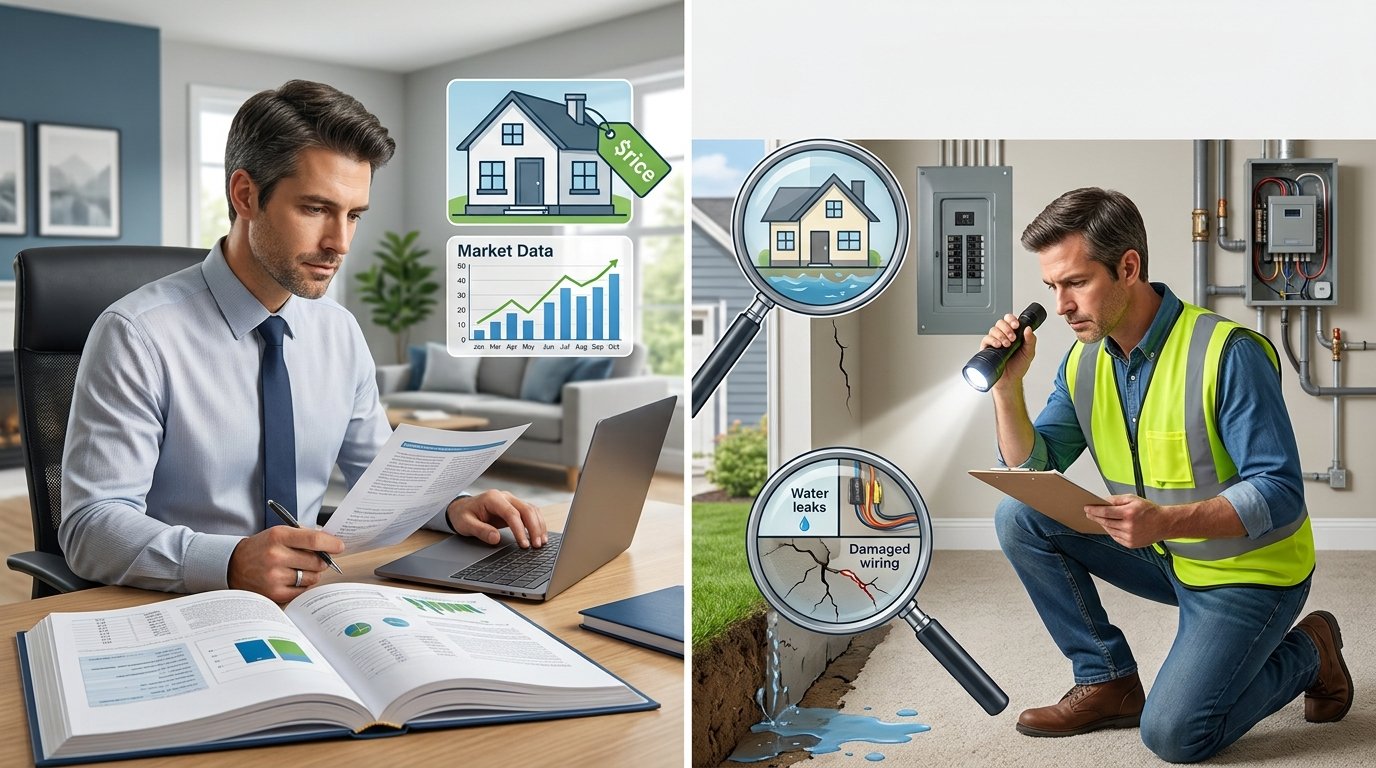
Think of a home inspection as a complete physical health checkup for the house. A home inspection is entirely about the physical condition and safety of the property. It tells you what is broken, what is unsafe, and what might break in the near future.
When you hire DeepSeek Home Inspections, our certified inspector spends several hours walking through every inch of the home. We do exactly what our name implies: we seek deep into the property to uncover hidden defects that a casual walkthrough would never reveal. We are not concerned with the real estate market value or the neighborhood. We are solely focused on the structural integrity and mechanical function of the building itself.
What Does a DeepSeek Home Inspector Look At?
We perform a deep investigation into the major systems of the house to protect your future. Our thorough evaluation covers:
- The Roof: We check for missing shingles, active leaks, flashing damage, and the remaining lifespan of the materials.
- The Foundation: We look for structural cracks, settlement signs, and moisture intrusion in the basement or crawlspaces.
- Electrical Systems: We test the panels, outlets, and visible wiring to ensure they are safe, functional, and up to modern codes to prevent fire hazards.
- Plumbing: We check water pressure, pipe materials, and look for hidden leaks that could cause mold or expensive water damage.
- HVAC Systems: We evaluate the heating and cooling units to ensure they function properly and safely through extreme seasonal temperatures.
Who Needs the Home Inspection?
The home inspection is for you, the home buyer. It gives you the peace of mind of knowing exactly what you are buying. If our deep investigation reveals major safety hazards or broken systems, you can use our detailed report to negotiate repairs with the seller. You can ask for a price reduction, request that they fix the issues before closing, or, in extreme cases, walk away from the deal entirely without losing your earnest money.
What is an Appraisal? Your Financial Value Check
If the home inspection is a physical health checkup, the appraisal is a financial statement. An appraisal is purely about the market value of the property. It tells you if the house is actually worth the price you agreed to pay for it.
An appraiser is a licensed professional who evaluates the property, but they do not test the systems or look for safety hazards. They are looking at the big financial picture. They measure the square footage, note the number of bedrooms and bathrooms, and evaluate the overall condition of the home based on a quick visual walkthrough.
What Does an Appraiser Look At?
The appraiser focuses on things that affect financial value and marketability:
- Comparable Sales: They look at recent sale prices of similar homes in the same neighborhood to see what the market is willing to pay.
- Location: Is the home in a desirable area? Is it next to a noisy highway or a beautiful park?
- Major Features: They note the lot size, the total living space, and any major upgrades like a renovated kitchen or a new deck.
- Obvious Issues: They will note visible damage, like a hole in the wall or a missing roof, but only because it affects the value. They do not test the electrical panel or run the dishwasher.
Who Needs the Appraisal?
The appraisal is primarily for the lender or the bank. The bank is about to lend you a huge amount of money, and they want to make sure they are not lending more than the house is actually worth. If you agree to pay four hundred thousand dollars, but the appraiser says the house is only worth three hundred and fifty thousand dollars, the bank will only lend you money based on the lower value. The appraisal protects the bank from making a bad investment.
The Core Differences: A Simple Breakdown
Let us look at the main differences side by side to make it crystal clear.
Purpose:
- Inspection: Checks the physical condition, safety, and mechanical function of the home.
- Appraisal: Checks the fair market value and financial worth of the property.
Who Hires Them:
- Inspection: The home buyer chooses and hires the inspection company.
- Appraisal: The lender or bank orders the appraisal, though the buyer usually pays the fee.
Who They Work For:
- Inspection: The inspector works for you, the buyer, protecting your safety and your future wallet.
- Appraisal: The appraiser works for the bank, protecting their financial investment.
Time Spent at the Property:
- Inspection: A thorough deep investigation takes two to four hours, depending on the size and age of the home.
- Appraisal: An appraisal usually takes about thirty minutes to an hour.
Can It Stop the Deal?
- Inspection: Yes. If major safety hazards are found, the buyer can walk away based on their inspection contingency.
- Appraisal: Yes. If the home appraises for less than the purchase price, the deal can fall apart unless the seller lowers the price or the buyer pays the difference in cash.
A Tale of Two Scenarios: Why You Need Both
Some buyers wonder if they can skip the home inspection since the bank is requiring an appraisal. This is a dangerous mistake that can lead to heartbreak. Let us look at two real world scenarios to show why you need both.
Scenario One: The Beautiful Money Pit
Imagine you buy a beautiful home. The house looks perfect, has a new kitchen, and is in a great school district. The appraiser confirms the house is worth every penny you offered. The bank is happy, and the loan is approved.
However, you skipped the home inspection to save a little money. Two months after moving in, you go down to the basement and find standing water. A plumber tells you the main sewer line is completely broken and needs a ten thousand dollar repair. You also find out the electrical panel is a fire hazard and needs to be replaced immediately.
The appraiser would never have caught these issues because they do not test the plumbing or open the electrical panel. The appraisal protects the bank, but the DeepSeek Home Inspection protects you from buying a dangerous money pit.
Scenario Two: The Overpriced Safe House
Imagine you find a house that is in perfect physical condition. The roof is new, the plumbing works flawlessly, and the foundation is solid. The home inspection from DeepSeek Home Inspections comes back completely clean.
However, the appraisal comes back low. The appraiser notes that the seller priced the home way too high compared to similar homes in the neighborhood. You might have overpaid for the area. The inspection protects your safety, but the appraisal protects your wallet from overpaying for a property.
Why Skipping One is a Dangerous Gamble
As you can see from the scenarios above, an appraisal and a home inspection protect two entirely different things. The appraisal protects the bank from lending too much money on a property. The home inspection protects your family from living in an unsafe house and facing unexpected, massive repair bills.
You cannot substitute one for the other. A high appraisal value does not mean the roof is not leaking. It just means the market values the location and the square footage. A clean home inspection does not mean you did not overpay for the house. It just means the physical systems are functioning safely today.
When you are spending hundreds of thousands of dollars on a home, you need both financial confidence and physical confidence. Skipping the home inspection leaves you blind to hidden defects. Skipping the appraisal leaves you vulnerable to overpaying. Both are essential shields in the real estate battlefield.
Frequently Asked Questions
Can an appraisal replace a home inspection? Never. An appraisal is a surface level evaluation to determine market value. It does not test the mechanical systems, check for hidden water damage, or ensure the home is safe to live in. You should always get a home inspection to protect your family and your investment.
Can a home inspection replace an appraisal? No. A home inspector does not evaluate market value or comparable sales. Your lender will require an appraisal to approve your mortgage loan. You cannot skip this step if you are financing the home.
Who pays for the appraisal and the home inspection? In most real estate transactions, the buyer pays for both. The home inspection fee is paid directly to the inspection company at the time of service. The appraisal fee is usually collected by the lender as part of your closing costs.
What happens if the DeepSeek inspection finds problems? You have several options. You can ask the seller to fix the problems before closing. You can ask the seller for a credit to cover the repair costs so you can hire your own contractors. You can accept the home as is. Or, if the problems are too severe, you can walk away from the deal if you have an inspection contingency in your contract.
What happens if the appraisal comes in low? If the home appraises for less than the purchase price, you have a few choices. You can negotiate with the seller to lower the price to the appraised value. You can pay the difference between the appraised value and the purchase price in cash. Or, you can walk away from the deal if you have an appraisal contingency, and get your earnest money back.
Can I skip the inspection on a new construction home? No. Even brand new homes can have defects. Builders make mistakes, city inspectors miss things, and materials can be faulty. A new construction inspection by DeepSeek Home Inspections ensures the builder completed the home to proper safety and building codes before you take ownership.
Conclusion
Buying a home is a huge milestone, and you deserve to go into it with open eyes and a clear mind. An appraisal and a home inspection are both vital steps in the real estate process, but they serve entirely different purposes. The appraisal tells the bank how much the house is worth. The home inspection tells you how safe and sound the house truly is.
Do not leave your family safety to chance, and do not assume a high appraisal means a problem free home. Protect your investment with a comprehensive evaluation. Contact DeepSeek Home Inspections today to schedule your home inspection. We will seek deep into the property to uncover the hidden truths, so you can close with total confidence and peace of mind.


