
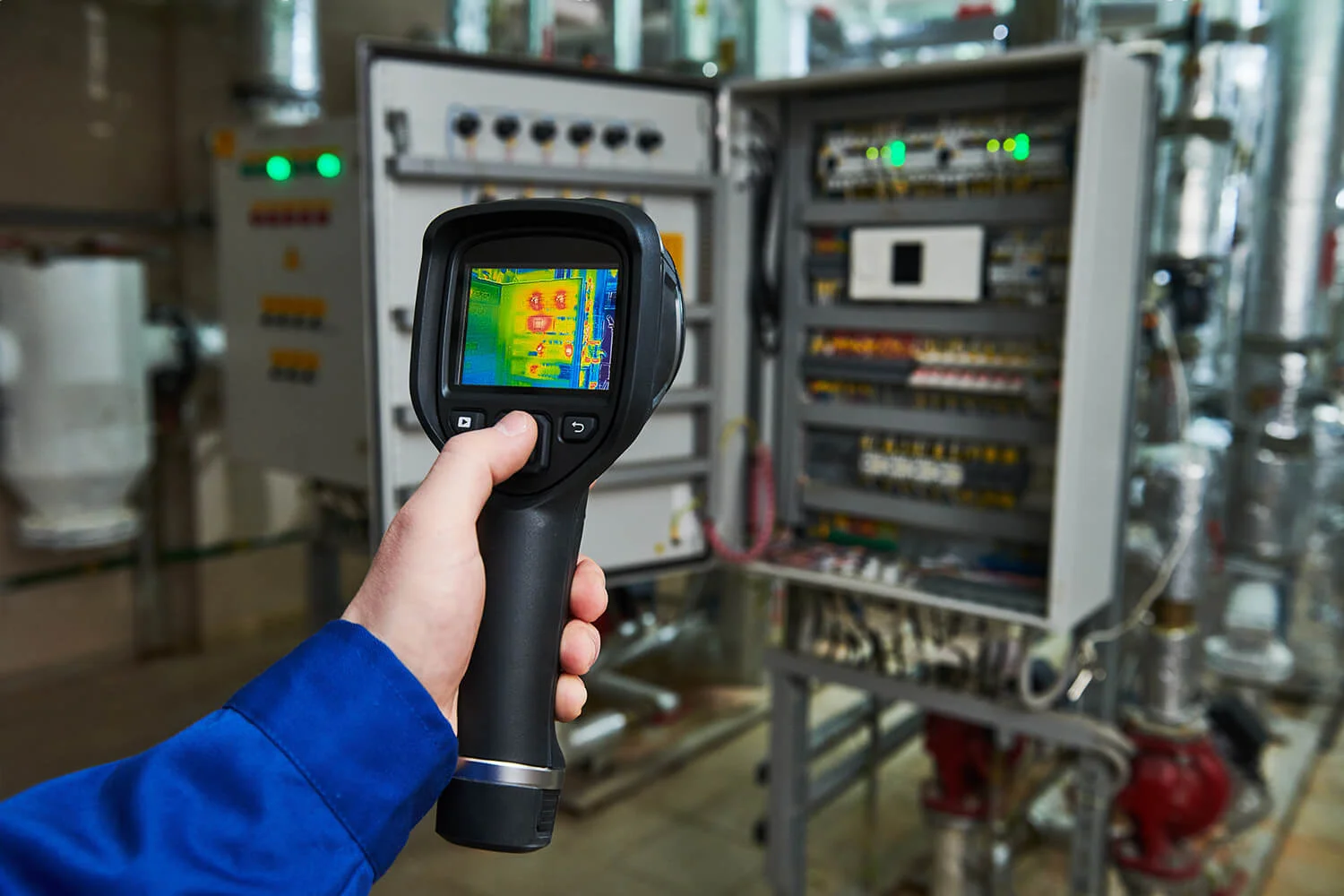
Electrical problems rarely announce themselves. A breaker that trips occasionally, an outlet that feels slightly warm, a light that flickers now and then — these small signals are easy to dismiss, right up until the moment they turn into a scorched panel, a melted wire, or worse, a house fire. That’s exactly the gap an infrared electrical inspection is designed to close. In Maryland, where homes range from decades-old rowhouses to newer construction with high-demand electrical loads, infrared inspections have become one of the most valuable tools for catching electrical problems while they’re still small, inexpensive, and safe to fix.
This guide explains what an infrared electrical inspection actually involves, why it matters for Maryland homeowners and buyers specifically, what the process looks like, and how it fits into a broader home inspection strategy.
What Is an Infrared Electrical Inspection?
An infrared electrical inspection uses a specialized thermal imaging camera to detect heat patterns inside electrical panels, wiring, outlets, switches, and connections. Because problem areas in an electrical system — loose connections, overloaded circuits, failing breakers, corroded wires — generate excess heat before they generate visible damage, infrared cameras can often catch a developing hazard weeks, months, or even years before it becomes a serious safety issue.
Unlike a standard visual inspection, which can only evaluate what’s visible to the naked eye, infrared imaging reveals what’s happening beneath the surface, inside walls, behind panel covers, and within connections that look completely normal from the outside. A wire that appears fine to a visual check can be running dangerously hot inside its insulation, and infrared technology is often the only non-invasive way to detect that.
This approach is closely related to the broader thermal imaging inspection services offered across a home, but an infrared electrical inspection specifically zeroes in on the electrical system — panels, breakers, wiring, and load-bearing circuits — where heat buildup is most dangerous.
Why Electrical Heat Buildup Happens
Understanding why infrared inspections matter starts with understanding why electrical components overheat in the first place. A few common causes include:
- Loose or corroded wire connections, which increase electrical resistance and generate heat
- Overloaded circuits carrying more current than they were designed for
- Aging or deteriorated insulation that no longer properly contains heat and current
- Failing breakers that no longer trip reliably when they should
- Improper or outdated wiring methods, especially in older Maryland homes
- Rodent damage or pest intrusion that has compromised wire insulation
Any one of these issues can quietly generate excess heat for a long time before it becomes visible, which is exactly why a visual-only inspection often isn’t enough to catch them.
Why Maryland Homes Are Particularly Vulnerable
Maryland’s housing stock spans a wide range of ages and construction styles, and that variety creates a wide range of electrical risk factors. Many homes across the state — particularly in older neighborhoods in Baltimore, Ellicott City, and surrounding areas — still have original wiring or electrical panels that were never designed to handle the electrical load of modern life: multiple computers, HVAC systems, electric vehicle chargers, and a growing number of high-draw appliances.
At the same time, newer Maryland homes aren’t immune either. Rapid construction timelines, subcontracted electrical work, and high-demand circuits for modern amenities can all introduce connection issues that aren’t visible until a problem has already developed. Combine that with Maryland’s humid summers and cold winters — both of which stress wiring and connections through expansion and contraction — and the case for periodic infrared electrical inspections becomes even stronger.
What Happens During an Infrared Electrical Inspection
A typical infrared electrical inspection follows a structured process designed to evaluate the full electrical system, not just a single component. This generally includes:
- Scanning the main electrical panel and all breakers under normal load conditions
- Checking sub-panels, if present, for the same heat-related issues
- Scanning accessible outlets, switches, and junction boxes throughout the home
- Evaluating major appliance connections, including HVAC systems, water heaters, and any high-draw equipment
- Comparing temperature readings across similar components to identify anomalies
- Documenting any hot spots with thermal images alongside standard photos for reference
Because electrical components need to be under a realistic load to reveal meaningful heat patterns, a good inspector will typically ask that major appliances and systems be running normally during the scan, rather than inspecting a home with everything powered down.
What an Infrared Scan Can Reveal
The results of an infrared electrical inspection typically fall into a few categories:
- Confirmation that the electrical system is operating within normal temperature ranges, providing peace of mind
- Early-stage issues, such as a single warm connection, that can be corrected cheaply before they escalate
- More serious findings, such as an overloaded panel or a failing breaker, that require prompt attention from a licensed electrician
- Documentation that’s useful for insurance purposes, home sales, or simply keeping records of a home’s electrical health over time
In many cases, catching a problem at the infrared stage means the difference between a minor repair and a major, disruptive one — or in the most serious cases, the difference between a normal evening and an electrical fire.
Infrared Inspections for Home Buyers
For buyers, an infrared electrical inspection adds a layer of insight that a standard home inspection may not fully cover. A general home inspection typically includes a visual review of the electrical panel and a sampling of outlets, but it doesn’t reveal hidden heat buildup behind walls or inside connections. Adding an infrared scan during the buying process helps ensure you’re not inheriting an electrical problem that’s invisible on move-in day but expensive to discover a year later.
This is particularly relevant for buyers considering a home that’s undergoing renovation or new construction, where a pre-drywall inspection can catch framing and rough-in issues before walls are closed up, and an infrared scan afterward can confirm those systems are performing safely once everything is finished and live.
Infrared Inspections for Current Homeowners
Homeowners don’t need to be buying or selling a home to benefit from an infrared electrical inspection. It’s a smart periodic check for any home, especially if:
- Breakers trip more often than they used to
- Outlets or switch plates feel warm to the touch
- The home has an older electrical panel or original wiring
- Major appliances or an EV charger have recently been added to the home’s electrical load
- There’s a faint burning smell near outlets or the panel, even an occasional one
Any of these signs warrants a closer look, and an infrared scan is one of the fastest, least invasive ways to get real answers.
How Infrared Inspections Fit Into a Complete Home Evaluation
An infrared electrical inspection maryland works best as part of a broader evaluation of a home’s condition. Pairing it with a general home inspection gives a complete picture of both the visible and hidden condition of a property, from the foundation to the electrical panel. Homeowners dealing with pest damage that may have compromised wiring insulation should also consider a termite inspection, since wood-destroying insects can sometimes damage wiring runs along with structural framing.
For homes with additional environmental concerns, it’s also worth reviewing services like mold inspection or radon testing, since a thorough understanding of a home’s overall health often turns up more than one issue worth addressing at the same time.
How Infrared Inspections Differ From a DIY Thermometer Check
With inexpensive infrared thermometers now widely available, some homeowners wonder whether they can simply check their own panel for hot spots. While a basic thermometer can occasionally flag an obviously hot surface, it falls well short of a professional infrared inspection in several important ways.
- Professional-grade thermal cameras capture a full temperature map of a surface, not just a single point reading, which makes it far easier to spot subtle gradients that indicate a developing problem
- Trained inspectors know what “normal” looks like across different components and can distinguish a genuine anomaly from a harmless variation caused by sunlight, airflow, or reflective surfaces
- A professional inspection includes proper safety precautions for opening and scanning a live panel, which is not something an untrained homeowner should attempt
- Findings are documented in a formal report with thermal images, which carries far more weight with an electrician, insurance company, or home buyer than a personal observation
In short, a consumer-grade thermometer might tell you something feels off, but a professional infrared inspection tells you exactly what, where, and how serious it is.
How Often Should a Home Get an Infrared Electrical Inspection?
There’s no single answer that fits every home, but a few general guidelines can help homeowners decide on a reasonable schedule:
- Homes over 25 years old, or with original wiring, benefit from an infrared scan every one to two years
- Newer homes with modern panels can typically go longer between scans, though a baseline inspection soon after move-in is still a smart idea
- Any home that has recently added a major electrical load — an EV charger, a hot tub, a home addition, or a large HVAC upgrade — should have a follow-up scan after the new equipment has been in regular use
- Homes that have experienced any signs of electrical trouble, even minor ones, should be scanned promptly rather than waiting for a scheduled interval
Setting a consistent inspection cadence turns infrared scanning from a one-time event into an ongoing safety practice, which is really where its value compounds over time.
Common Myths About Infrared Electrical Inspections
A few misconceptions tend to come up when homeowners first learn about infrared inspections, and it’s worth addressing them directly:
- “If my breakers haven’t tripped, my system must be fine.” Breakers are designed to respond to specific overload conditions, not general heat buildup from a loose connection. A connection can run hot for a long time without ever triggering a breaker.
- “Infrared cameras can see through walls.” They can’t. Infrared cameras detect surface heat, which means a scan is most effective at accessible components like panels, outlets, and switches, rather than wiring buried deep inside a wall with no surface access at all.
- “A new home doesn’t need this.” New construction is not immune to poor connections or installation errors, and an infrared scan performed shortly after move-in can catch workmanship issues while they’re still easy to address under a builder’s warranty.
- “This is the same as a home inspection.” A general home inspection includes a visual review of accessible electrical components, but it does not include thermal imaging unless specifically requested or bundled in as an add-on service.
What to Do If a Problem Is Found
If an infrared inspection identifies a hot spot or anomaly, the next step depends on severity. Minor issues, like a single warm connection, might simply need tightening or replacement by a licensed electrician. More significant findings — an overloaded panel, widespread heat patterns, or a failing major component — should be treated as a priority repair, not something to schedule “eventually.” Electrical heat buildup doesn’t resolve on its own, and it rarely improves with time.
A written report with thermal images gives homeowners and electricians a clear, documented starting point, rather than relying on guesswork about where a problem actually originates.
The Cost of Skipping an Inspection
It’s worth briefly considering what’s actually at stake when an electrical problem goes undetected. Beyond the obvious fire risk, an unaddressed hot connection or overloaded circuit can cause damage to appliances, degrade wiring insulation further over time, and in some cases lead to insurance complications if a claim reveals a pre-existing, unaddressed hazard. Compared to the cost of an infrared electrical inspection, the potential downside of skipping one — a house fire, a major repair, a denied insurance claim, or simply the anxiety of not knowing — makes the inspection an easy decision for most homeowners once they understand what’s on the other side of it.
There’s also a practical financial angle for sellers. A documented, clean infrared electrical inspection can be a meaningful selling point in a competitive Maryland real estate market, giving buyers one less thing to negotiate over and one more reason to feel confident about the purchase.
Scheduling an Infrared Electrical Inspection in Maryland
Whether you’re buying a home, maintaining one you already own, or simply want peace of mind about your electrical system’s condition, an infrared electrical inspection is one of the most efficient ways to catch a hidden hazard before it becomes an emergency. You can review the full lineup of available inspection services or go ahead and schedule an inspection directly. If you have questions about how the process works or what to expect, the FAQs page covers many of the most common questions, and the About Us page has more on the team performing the inspection.
Final Thoughts
Electrical problems are uniquely dangerous precisely because they’re so easy to miss. A wire can run dangerously hot for months before any visible sign appears, and by the time smoke or sparking shows up, the situation has often moved well past a simple fix. An infrared electrical inspection changes that equation, giving homeowners and buyers in Maryland a way to see the invisible and catch problems while they’re still small, affordable, and easy to correct. For a system as critical — and as easy to overlook — as your home’s electrical wiring, that kind of early insight is worth far more than the cost of the inspection itself.


