
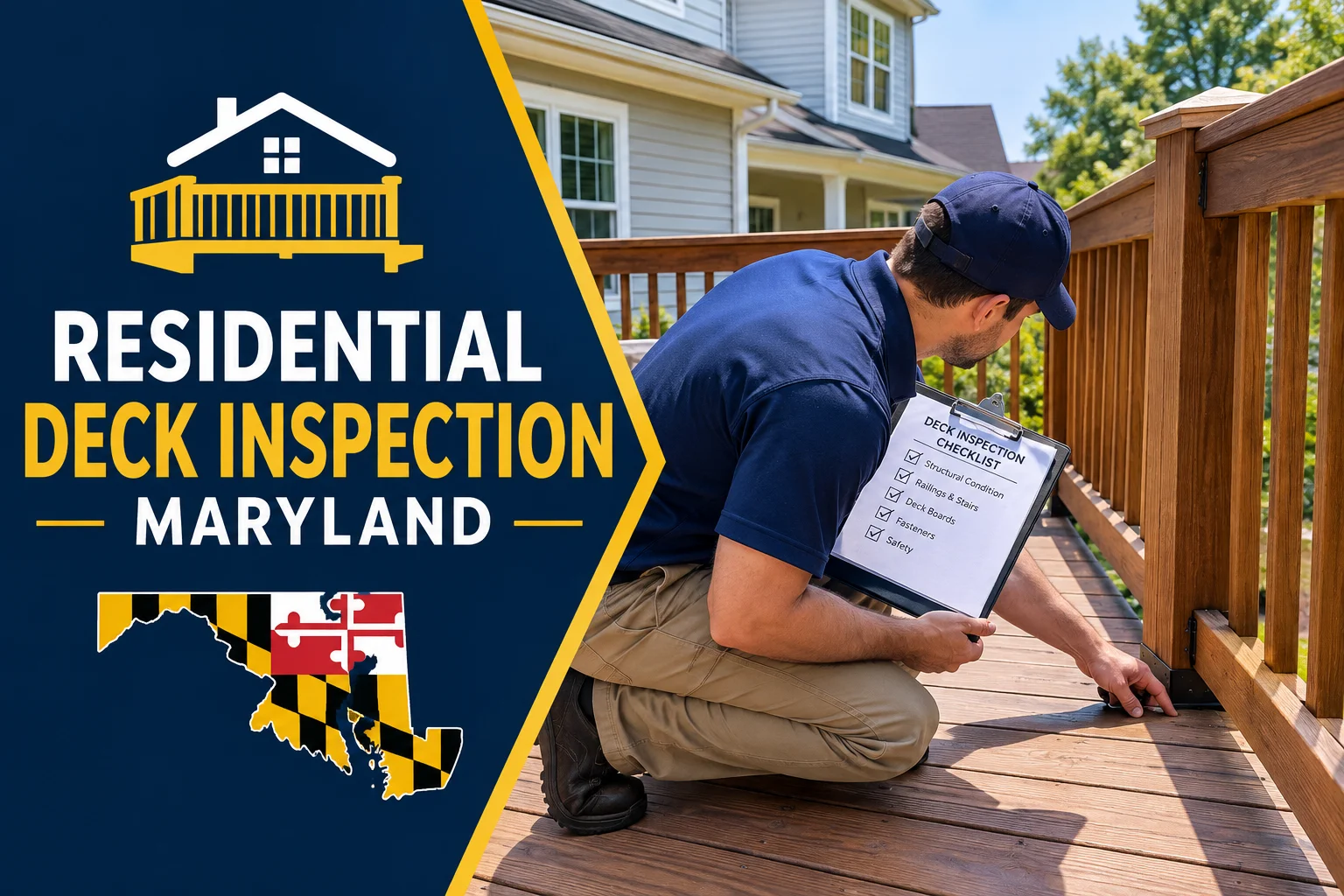
A residential deck can provide a comfortable outdoor space for relaxing, entertaining guests, enjoying family meals, and spending time outside. However, decks are exposed to changing weather conditions, moisture, temperature fluctuations, and everyday use. Over time, these factors can contribute to deterioration, loose connections, damaged boards, and other conditions that may affect a deck’s safety and performance.
For homeowners and homebuyers, a residential deck inspection in Maryland can help identify visible concerns and provide a clearer understanding of the deck’s condition. Whether you own an older wooden deck, are purchasing a home with an elevated outdoor platform, or simply want to understand its maintenance needs, a professional inspection can be a useful part of responsible property care.
Maryland’s seasonal weather makes regular observation and maintenance particularly important. Rain, humidity, winter conditions, and prolonged moisture exposure can affect wood and metal components. Decks attached to homes also depend on connections and supporting structures that should be examined carefully.
This guide explains what a residential deck inspection involves, which components deserve attention, common warning signs, and how Maryland homeowners can approach deck maintenance and professional evaluations.
What Is a Residential Deck Inspection?
A residential deck inspection is an examination of a deck’s observable condition, components, and potential deficiencies. The purpose is to identify visible concerns that may affect its function, condition, or safety.
A home inspection may include an examination of accessible attached decks, balconies, steps, and associated railings. Maryland’s home inspection standards require licensed home inspectors to visually inspect accessible exterior components, including attached decks and their associated railings and balusters. Inspectors must also describe deck components, including the absence of flashing at the ledger
A typical visual inspection may consider:
- Deck boards and walking surfaces.
- Visible joists, beams, posts, and other framing.
- Accessible connections and fasteners.
- Guardrails, balusters, stairs, and handrails.
- The visible connection between an attached deck and the house.
- Signs of moisture damage, deterioration, movement, or other visible deficiencies.
The scope depends on accessibility, the type of inspection, and the inspector’s applicable standards. A standard home inspection is not the same as a structural engineering evaluation or a municipal building-code inspection.
Why Deck Inspections Matter for Maryland Homeowners
Deck inspections can help homeowners understand visible problems before they become more difficult to address. They can also provide useful information when buying, selling, maintaining, or renovating a property.
1. Identifying visible deterioration
Wood can deteriorate when exposed to persistent moisture or insufficient maintenance. Metal connectors and fasteners can also corrode. An inspection may identify visible warning signs that deserve further evaluation.
2. Understanding structural concerns
A deck relies on its posts, beams, joists, connections, and supporting elements to transfer loads. Visible movement, damaged framing, or questionable connections may indicate a need for repair or additional professional assessment.
3. Recognizing potential fall hazards
Loose railings, damaged stairs, unstable handrails, and deteriorated walking surfaces can create hazards. Identifying these conditions can help homeowners determine what should be addressed.
4. Supporting homebuyers and sellers
A deck may be an important feature of a property. Understanding its visible condition can help buyers ask informed questions and help sellers identify maintenance concerns that may need attention.
5. Planning maintenance
Inspection findings can help homeowners prioritize maintenance and determine whether a qualified contractor or structural professional should evaluate particular concerns.
An inspection provides information about observed conditions at a particular time. It does not guarantee that a deck is free of concealed defects or that it will remain safe indefinitely.
What Does a Deck Inspector Examine?
During a residential deck inspection, the inspector evaluates accessible components and documents visible conditions within the inspection’s scope
1. Deck boards and walking surfaces
The inspector looks for visible damage to the deck’s surface, including:
- Cracked, split, warped, or loose boards.
- Soft or deteriorated wood.
- Raised fasteners or uneven walking surfaces.
- Gaps, damaged edges, or other visible trip hazards.
- Signs of persistent moisture or surface deterioration.
Damaged boards can affect usability and may allow water to reach underlying framing. The seriousness of a finding depends on its location, extent, and relationship to the supporting structure.
2. Joists, beams, and framing
The framing supports the deck and transfers loads to its posts, connections, and other structural elements.
An inspector may examine accessible framing for visible signs such as:
- Cracking, splitting, or deterioration.
- Sagging or unusual movement.
- Evidence of water damage.
- Corrosion or deterioration around connectors.
- Improperly supported or visibly displaced components.
Some framing areas may be concealed by ceilings, fascia boards, decking, or other finishes. A visual home inspection generally does not involve dismantling the deck to expose hidden components.
3. Posts and supporting elements
Deck posts and their supporting connections are important parts of the load path. An inspector may look for visible deterioration, damage, movement, or conditions around accessible post bases and supports that warrant further investigation.
If a post appears damaged or unstable, a qualified professional may need to evaluate the condition and determine the appropriate repair.
4. Ledger board and house connection
On an attached deck, the ledger board is the component that connects the deck to the house. Its attachment and moisture protection deserve particular attention.
The inspection may consider visible concerns such as:
- Missing or visibly deficient flashing.
- Signs of water intrusion near the connection.
- Deterioration of accessible wood.
- Visible separation or movement.
- Concerns involving accessible fasteners or connections.
Maryland’s home inspection standards specifically include describing deck components and the absence of flashing at the ledger board.
Maryland Regulation
Because important portions of a ledger connection may be concealed, a visual inspection cannot necessarily confirm every fastener or determine the connection’s full structural capacity.
5. Railings, balusters, and guards
Railings and guards help reduce the risk of falls from elevated deck areas. An inspector may examine accessible components for looseness, damage, missing elements, deterioration, and other visible concerns.
Homeowners should pay attention to railings that move unexpectedly, broken balusters, damaged posts, and connections that appear loose.
If a railing feels unstable, avoid relying on it until the concern has been evaluated and corrected.
6. Stairs, stringers, and handrails
Deck stairs should provide a reasonably stable route between the deck and the surrounding area.
An inspection may identify visible concerns involving:
- Cracked or deteriorated stair treads.
- Damaged stringers.
- Loose or uneven steps.
- Unstable handrails.
- Damaged connections.
- Visible trip or fall hazards.
The inspector documents observed conditions, while the need for repairs or specialized evaluation depends on the finding.
7. Drainage and moisture conditions
Water management is important for decks, particularly where moisture can collect near framing, posts, or the house connection.
An inspector may observe visible drainage concerns, water staining, deteriorated finishes, or conditions that appear to promote persistent moisture.
Homeowners should keep deck surfaces and nearby drainage areas maintained, while avoiding modifications that could interfere with the building’s drainage or structural systems.
Common Deck Problems in Maryland
Deck problems can develop gradually, and their causes may not always be obvious from a visual examination. The following conditions are worth understanding.
Wood rot and deterioration
Persistent moisture can contribute to wood decay. Discoloration, softness, crumbling, or visibly damaged timber may indicate a need for further evaluation.
Corroded connectors and fasteners
Corrosion or deterioration around metal hardware may affect connections. The condition should be assessed according to its location, severity, and role in the structure.
Loose or damaged railings
Loose posts, missing balusters, and damaged railing components may create fall hazards and should be addressed appropriately.
Damaged stairs
Worn or deteriorated treads, damaged stringers, and unstable handrails can affect safe access to the deck.
Ledger and flashing concerns
Inadequate visible moisture protection or signs of deterioration near the house connection may warrant additional investigation.
These examples are possible inspection findings, not a claim that every Maryland deck has these problems. The actual condition of a deck must be assessed individually.
Maryland Deck Codes, Permits, and Inspection Requirements
Homeowners planning to build, replace, or significantly modify a deck should check the requirements of the local building department before starting work.
Maryland adopts statewide building performance standards, but local jurisdictions may make certain amendments and administer permitting and enforcement. Requirements can therefore depend on the property’s location and the type of work being performed.
For example, Montgomery County publishes a residential deck inspection process that includes footing, framing, and final inspection stages for applicable permitted work. The county’s published instructions identify work that must be completed before requesting each inspection.
A homeowner should distinguish between:
- A home inspection: A visual assessment intended to provide information about the observed condition of a property.
- A municipal building inspection: An inspection associated with applicable permits and construction requirements.
- A structural engineering evaluation: A professional assessment of structural concerns within the engineer’s agreed scope.
A home inspection should not be treated as certification that a deck complies with every applicable building code. Maryland’s home inspection standards explain that a standard inspection is not a code-compliance inspection and does not provide engineering services.
For project-specific permit or code questions, contact the local authority having jurisdiction.
How Often Should You Have Your Deck Inspected?
There is no single inspection schedule that is appropriate for every residential deck. The frequency of professional evaluation depends on factors such as age, construction type, exposure to moisture, maintenance history, visible condition, and whether the deck has experienced damage or significant changes.
Consider arranging an inspection or professional assessment when:
- You are purchasing a home with an existing deck.
- The deck has visible deterioration or unusual movement.
- You notice damaged stairs, loose railings, or questionable connections.
- The deck has experienced a significant storm or other potentially damaging event.
- You are planning alterations, repairs, or changes to the deck.
- You have concerns about the condition of an older deck.
Homeowners can also perform simple visual observations as part of routine property maintenance. However, do not climb onto an area that appears unstable or attempt to inspect dangerous or inaccessible components yourself.
Residential Deck Inspection for Homebuyers in Maryland
If you are buying a home with a deck, understanding its visible condition can help you make more informed decisions during the property evaluation process.
A deck may look attractive from above while having concerns in less visible areas, such as the framing, supports, or connection to the house. A home inspection can help identify observable deficiencies within the inspection scope.
Before the inspection, consider asking:
- Are the deck boards visibly damaged or deteriorated?
- Are there concerns involving accessible framing or supports?
- Are the railings, stairs, and handrails visibly secure and serviceable?
- Are there visible concerns near the ledger board or house connection?
- Are any areas inaccessible or concealed?
- Does any finding warrant further evaluation by a qualified contractor or structural engineer?
An inspection report can help you understand what was observed and which concerns may need follow-up. It should not be interpreted as a guarantee about future performance or the condition of concealed components.
How to Maintain Your Residential Deck
Routine maintenance can help homeowners monitor their deck and address visible deterioration.
Keep the deck clean
Remove accumulated leaves, dirt, and debris where practical. Organic material can retain moisture and make it harder to notice developing problems.
Monitor visible wood condition
Look for cracking, splitting, soft areas, and deterioration. If you suspect structural damage, arrange an appropriate professional assessment rather than attempting an uncertain repair.
Check railings and stairs visually
Observe whether railings, handrails, and stairs show signs of damage or movement. Avoid using components that appear unstable.
Pay attention to moisture
Watch for persistent dampness, water staining, and deterioration near the house connection or supporting elements. Address drainage concerns using appropriate methods.
Maintain finishes according to the material
Follow the manufacturer’s guidance for cleaning, sealing, staining, or maintaining the deck material. Different wood species and composite products have different care requirements.
Use qualified professionals for repairs
Structural repairs, connection modifications, and substantial alterations may require a qualified contractor, engineer, or permit. Confirm the appropriate requirements before work begins.
Maintenance can help preserve a deck, but it does not replace a professional evaluation when safety or structural concerns are present.
Choosing a Home Inspection Company in Maryland
When selecting a home inspection provider, consider whether the company can explain its inspection scope, reporting process, qualifications, and limitations clearly.
Look for a provider that:
- Uses appropriately qualified and licensed inspectors.
- Explains which deck components are included in the inspection.
- Documents visible concerns in a clear report.
- Identifies limitations and inaccessible areas.
- Recommends further evaluation when a concern is outside the inspector’s scope.
- Communicates findings in language that homeowners and homebuyers can understand.
A clear report can help you decide what questions to ask next and whether a specialist should evaluate a particular issue.
DeepSeek Home Inspections: Residential Inspection Support in Maryland
If you are buying a home or reviewing the condition of your property, a professional home inspection can help you understand the visible condition of important components, including accessible attached decks.
DeepSeek Home Inspections provides home inspection services in Maryland. Homeowners and homebuyers can visit the website to learn more about the company and explore its inspection information.
DeepSeek Home Inspections
Home inspection information and services in Maryland.
For details about inspection services, coverage, and scheduling, contact the company directly and confirm whether your particular deck inspection needs are within its current service scope.Visit DeepSeek Home Inspections
Frequently Asked Questions About Residential Deck Inspection in Maryland
1. What is included in a residential deck inspection?
A visual inspection may include accessible deck boards, framing, supports, railings, stairs, connections, and visible moisture-related concerns. The exact scope depends on the type of inspection and accessibility.
2. Are attached decks included in a Maryland home inspection?
Maryland’s home inspection standards include accessible attached decks, balconies, steps, and associated railings and balusters within the required exterior visual inspection.
3. Does a home inspection certify that my deck meets building codes?
No. A standard home inspection is not a code-compliance inspection and does not replace a municipal inspection or structural engineering evaluation.
Library of Maryland Regulations
4. What are common signs of deck damage?
Visible warning signs may include deteriorated wood, cracked boards, loose railings, damaged stairs, corrosion, unusual movement, and concerns around the connection between the deck and the house.
5. Should I get a deck inspected when buying a home?
A home inspection can help identify visible deck concerns and provide information about components that may need further evaluation. Buyers should review the report and consult appropriate specialists when recommended.
6. Who should evaluate serious structural deck concerns?
A qualified structural engineer or other appropriately qualified professional may be needed when concerns involve structural capacity, significant movement, or complex connection problems. The appropriate professional depends on the issue.
7. Do I need a permit to build or modify a deck in Maryland?
Permit requirements depend on the work and the local jurisdiction. Contact the building department responsible for the property to confirm applicable requirements before beginning construction or substantial modifications.
8. Can a deck inspection identify concealed damage?
A standard visual inspection may not identify concealed or latent defects. If visible signs suggest a hidden problem, additional investigation by an appropriately qualified professional may be necessary.
Library of Maryland Regulations
+1
Conclusion
A residential deck is an important part of many Maryland homes, but its condition should not be judged by appearance alone. Deck boards, framing, supports, railings, stairs, and connections all contribute to its function and safety.
A residential deck inspection in Maryland can help homeowners and homebuyers identify visible concerns, understand inspection limitations, and determine whether further professional evaluation is appropriate.
Regular maintenance, attention to moisture, and timely professional assessment can help homeowners make informed decisions about their outdoor spaces. If you are purchasing a property or have concerns about an existing deck, consider arranging an appropriate inspection and addressing any recommended follow-up.


